
Last Updated: October 30, 2026
Quick Summary
Choosing the right hook for weedless rigs starts with the hook style, not the brand. Use an offset worm hook for slim worms and finesse plastics, an extra-wide-gap hook for bulky plastics and heavy cover, and a spring-lock or screw-lock hook for heavy vegetation. Match the gap to the plastic's body thickness, then verify the fit on the bait before you cast.
- The hook gap should be at least as wide as the plastic is thick where the hook exits.
- Go up one hook size from the size chart when fishing a thick-bodied bait.
- Bias toward heavier wire in heavy cover so the hook won't bend out on a big fish.
- Rig a soft plastic weedless in four steps, finishing with the point tucked skin-hook style.
- A weedless wacky rig hook needs a wide gap, a weed guard, and a sharp point.
Table of Contents
- Start With the Hook Style, Not the Brand
- EWG vs Offset Worm Hook: Which One Fits Your Plastic?
- Use a Weedless Hook Size Chart to Match Lure Length
- How to Rig a Soft Plastic Weedless in Four Steps
- Picking the Right Weedless Wacky Rig Hook
- Hook Gap, Wire Gauge, and Point Geometry Explained
- Troubleshooting Missed Strikes and Poor Hook Penetration
- Keep Your Hook Clear and Your Rig Ready
- Frequently Asked Questions
Start With the Hook Style, Not the Brand
Choosing the right hook for weedless rigs starts with one decision: the hook style, not the label on the package. If you're weighing weedless hooks vs standard hooks for bass, that comparison helps you commit to a style before you buy.
Anglers fishing shallow ponds and thick vegetation often buy a popular hook, rig it up, and wonder why fish come off. The hook is rarely the only problem. The style often is.
Below, we break down the three hook families, show you a size chart, and walk through rigging step by step.
The Three Hook Families You'll Actually Use
Most soft-plastic fishing comes down to three hook types:
- Offset worm hook: The all-around choice for Texas rigs. The bend lets the bait sit straight.
- Extra-wide-gap (EWG) hook: Built for bulky plastics and thick bodies. More room for the bait to clear the gap on the hook set.
- Spring-lock or screw-lock hook: Holds the bait in place with a coil or screw at the nose. Great for heavy cover.
Pick the family first. Then pick the size.
EWG vs Offset Worm Hook: Which One Fits Your Plastic?
The EWG vs offset worm hook question comes down to body thickness and how the bend interacts with the plastic. Use an EWG for thick, bulky plastics. Use an offset worm hook for slim worms and creature baits.
What the Bend Actually Does
An offset worm hook has a dogleg bend near the eye and a relatively narrow gap. The dogleg lets the bait sit straight along the shank, which keeps a slim worm from spinning.
An extra-wide-gap hook spreads the gap wider than the body is thick. On a bulky plastic, that extra room is what lets the bait fold out of the way so the point can drive into the fish's mouth.
Side-by-Side
| Hook Type | Best For | Mechanism | Watch Out For |
|---|---|---|---|
| Offset worm hook | Slim worms, finesse plastics, lighter cover | Dogleg keeps bait straight; narrow gap suits thin bodies | Gap can be tight on fat baits |
| EWG hook | Bulkier plastics, beaver-style baits, heavy cover | Wide gap clears thick plastic on the set | Can feel big on small worms |
| Spring/screw-lock | Heavy vegetation, long casts | Coil or screw at the nose holds the bait in place | Adds a step to rigging |
The Gap Rule
A common mistake is forcing a fat bait onto a narrow-gap hook. The plastic crowds the gap, and the point never gets a clean shot at the fish's mouth.
A practical rule: the gap should be at least as wide as the plastic is thick at the point where the hook exits. If the plastic bulges past the gap, size up or switch to an EWG.
When the Style Still Isn't Enough
Style and gap get you most of the way, but wire gauge and point geometry finish the job. A heavy-wire EWG in open water can cost you hookups because the point needs more force to drive home.
If you want more detail on picking hooks that hold up over repeated trips, our guide on tips for choosing durable weedless fishing hooks covers wire and finish.
Use a Weedless Hook Size Chart to Match Lure Length
A weedless hook size chart takes the guesswork out of pairing hook to plastic, but length alone is only the first input. The chart below is a starting point; the decision rules under it are what actually dial in the hook.
| Lure Length | Slim Body (worm, finesse) | Standard Body (creature, craw) | Thick/Bulky Body (beaver, toad) |
|---|---|---|---|
| 3 inches | 1/0 offset worm | 2/0 offset worm | 2/0 EWG |
| 4 inches | 2/0 offset worm | 3/0 offset worm or EWG | 3/0 EWG |
| 5 inches | 3/0 offset worm | 4/0 EWG | 4/0 to 5/0 EWG |
| 6 inches | 4/0 offset worm | 5/0 EWG | 5/0 EWG |
| 7 inches and up | 4/0 to 5/0 offset worm | 5/0 to 6/0 EWG | 6/0 EWG |
How to Read the Chart
Start with lure length on the left, then move right to the column that matches the plastic's body. A slim trick worm and a bulky beaver bait can both measure 5 inches, but they need different hooks because the plastic's thickness changes how much gap the point needs to clear.
Three rules override the chart:
- Thick body? Go up one hook size from the chart. A fat bait crowds a narrow gap, and the point never gets a clean shot at the fish's mouth.
- Slim finesse worm? Stay on the smaller end. An oversized hook on a thin worm kills action and looks unnatural.
- Heavy cover? Bias toward the heavier-wire version of the same size. The gap stays the same, but the hook won't bend out on a big fish in thick vegetation.
The Fit Test Before You Cast
Numbers on a package vary between brands, so treat the chart as a starting point and verify the fit on the bait itself:
- Rig the plastic straight and centered.
- Lay the hook along the bait's back and note where the point exits.
- The point should sit just at the plastic's back, not buried deep and not poking out ahead of the body.
- If the plastic crowds the gap, size up. If the hook looks oversized relative to the body, size down.
A hook that passes the fit test will rig straight, run true, and give the point a clear path on the set. A hook that fails it will spin, foul, or miss fish all day.
If you want more detail on picking hooks that hold up over repeated trips, our guide on tips for choosing durable weedless fishing hooks covers wire and finish.
How to Rig a Soft Plastic Weedless in Four Steps
Rigging a soft plastic weedless takes about a minute once you've done it a few times. The goal is a straight, centered bait with the point tucked just under the surface.
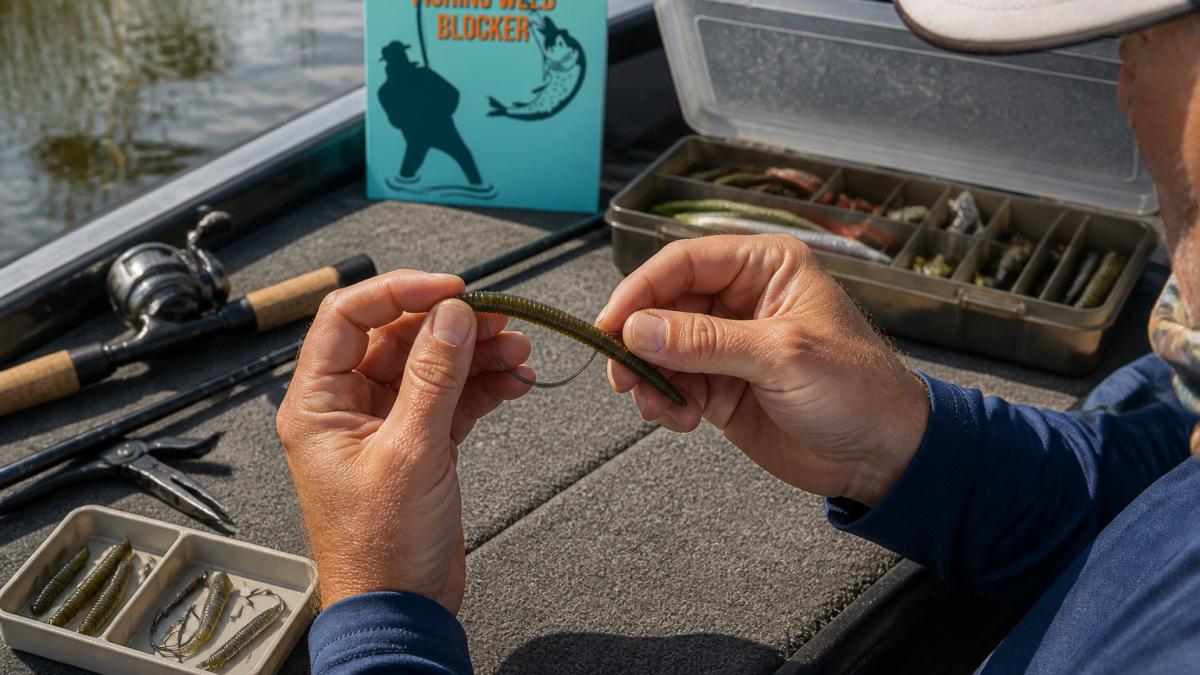
- Start the hook at the nose. Push the point into the center of the plastic's head and out the top.
- Slide the bait up to the bend. Let the plastic sit at the hook's bend, not past it.
- Measure the exit point. Lay the hook along the bait's back. Note where the point should come out.
- Tuck the point. Push the point through the plastic and back in slightly, so it sits skin-hook style. The point stays protected but ready to set.
A common mistake is rigging the bait crooked. Before you finish, check our guide to the best fishing knots for weedless rigging so the knot holds the rig you just tied.
Picking the Right Weedless Wacky Rig Hook
A weedless wacky rig hook is a wide-gap hook with a weed guard, and it's the go-to for fishing a stickbait in open water and light cover. The bait hangs from the middle, so the hook needs a wide gap and a guard to slide through weeds.
What to look for:
- Wide gap: The bait folds on the strike. A wide gap gives the point room.
- Weed guard: Keeps the point from snagging on the fall.
- Sharp point: Wacky rigs get bit on the drop. A dull point misses those fish.
Hook Gap, Wire Gauge, and Point Geometry Explained
Hook gap, wire gauge, and point geometry decide how well a weedless rig hooks and holds fish. Gap is the distance from the shank to the point. Wire gauge is the thickness of the metal. Point geometry is the shape and sharpness of the tip.
Here's why each one matters:
- Gap: Too narrow, and the plastic blocks the point. Too wide, and the hook feels big to the fish.
- Wire gauge: Heavy wire holds big fish and heavy cover. Light wire penetrates easier and gives baits more action.
- Point geometry: A sharp, straight point penetrates on the set. A rolled or dull point skips off.
A heavy-wire hook in open water can cost you hookups. A light-wire hook in thick brush can bend out. Match the wire to the cover.
Troubleshooting Missed Strikes and Poor Hook Penetration
Missed strikes and poor hook penetration usually trace back to three things: a buried hook point, a hook that's too small, or a soft hook set. If you're wondering does weedless fishing affect hook set, that guide covers whether the rigging itself is the culprit. Fix those, and your hookup ratio climbs.
Run through this checklist when fish come off:
- Point buried too deep? Skin-hook it so the point sits just under the surface.
- Hook too small for the bait? Size up so the gap clears the plastic.
- Line too heavy or rod too stiff? A softer tip helps the hook drive home.
- Setting too early? Let the fish load the rod before you swing.
Keep Your Hook Clear and Your Rig Ready
A sharp hook is only half the battle. Weeds still grab your line, your weight, and your bait, and a fouled rig fishes blind.
That's where the Fishing Weed Blocker earns its place in the boat. The patented device grabs weeds before they reach your bait, so your hook stays clear and your presentation stays clean. It's built for trolling and bait fishing.
A few habits keep your hooks ready between trips:
- Dry your hooks after every trip to slow corrosion.
- Touch up points with a sharpener before you fish.
- Store hooks in a holder so points don't dull against each other. Our guide to the best fishing hook holders for snag-free storage shows safe ways to protect hooks between trips.
Frequently Asked Questions
How do you choose the right size hook for a weedless rig?
Match the hook to the lure, not the fish. Thicker-bodied creatures and craws need a wider gap than a slim stick bait of the same length.
What is the difference between an offset hook and an EWG hook?
An offset worm hook has a bend that sits closer to the bait's centerline, which suits slim worms and stick baits. An extra-wide-gap (EWG) hook opens the gap wider, so it handles thick-bodied plastics, creatures, and toads without the plastic blocking the point. If you fish both slim and bulky plastics, keep a pack of each style in your box and switch based on body thickness.
Why am I missing fish with a weedless hook?
Most missed strikes with weedless rigs come from three things: the hook point buried too deep in the plastic, a gap too narrow for the bait's thickness, or a hook that has gone dull. Skin-hooking the point just barely into the plastic and re-checking sharpness after every snag will fix most of it. A firm, sweeping hook set rather than a hard jerk also helps the point clear the plastic and reach the fish.
How do you keep a weedless rig from collecting weeds?
Rig the plastic straight and centered so the bait tracks true, and keep the hook point skin-hooked just at the surface of the plastic. In heavy cover, a device like the Fishing Weed Blocker grabs weeds before they reach your bait, which keeps the hook and presentation clear whether you are trolling or bait fishing. Check your bait after every few casts and slide the plastic back into place if it has slipped.
Choosing the right hook for weedless rigs takes a little practice, but the payoff shows up in more solid hook sets and fewer lost fish. Pair the right hook with a device that keeps weeds off your bait, and you spend more time fishing and less time clearing. Get started with Fishing Weed Blocker and keep your hook clear, your bait clean, and your line in the water.
