

Last Updated: November 1, 2026
Quick Summary
To tune jerkbaits, test the bait in clear water to establish a baseline, then add suspend dots or strips one at a time until it hangs level and pauses in place. Fix crooked tracking by bending the line tie slightly opposite the drift, and retest after every single change.
- A suspending jerkbait is a balance problem, not a paint problem.
- Add a small dot near the front treble to correct a slow sink.
- Move weight toward the tail when the bait sits nose-down.
- Over-weighting is the most common tuning mistake and kills the glide.
- Fluorocarbon sinks and can drag a suspending bait down; monofilament floats and can lift it.
Table of Contents
- Why Tuning a Jerkbait Changes Everything
- How to Tune a Jerkbait: A Step-by-Step Procedure
- Jerkbait Suspending vs Floating: Choosing the Right Action
- How to Fish a Jerkbait in Cold Water
- Best Rod and Reel for Jerkbait Fishing
- Hook and Weight Changes: Trade-Offs That Affect Action
- Tuning Decisions by Water Temperature, Clarity, and Line
- Keep Your Tuned Jerkbait Working Through Weeds
- Frequently Asked Questions
Why Tuning a Jerkbait Changes Everything
A jerkbait that hangs nose-up in the water column will out-fish a perfectly good lure that was never adjusted. That is the whole case for tuning. When you learn how to tune jerkbaits for better action, you stop guessing why one bait gets crushed and an identical one gets ignored. This guide walks through the testing, weighting, and retrieve work that turns a stock bait into a fish-catching tool.
Here is the part most anglers miss: a suspending jerkbait is a balance problem, not a paint problem. The bait has to sit level, pause in place, and twitch on command. Get the balance right and the lure does the selling for you. Get it wrong and no color pattern will save it.
Below, we show you a repeatable tuning procedure you can run at the dock in a few minutes.
How to Tune a Jerkbait: A Step-by-Step Procedure
Tuning a jerkbait means testing how it sits and moves in water, then adding small amounts of weight or adjusting hardware until it suspends level and tracks straight. The goal is a bait that pauses in place and responds to a twitch without rolling. Work through these steps in order, and change only one variable at a time so you know what worked.
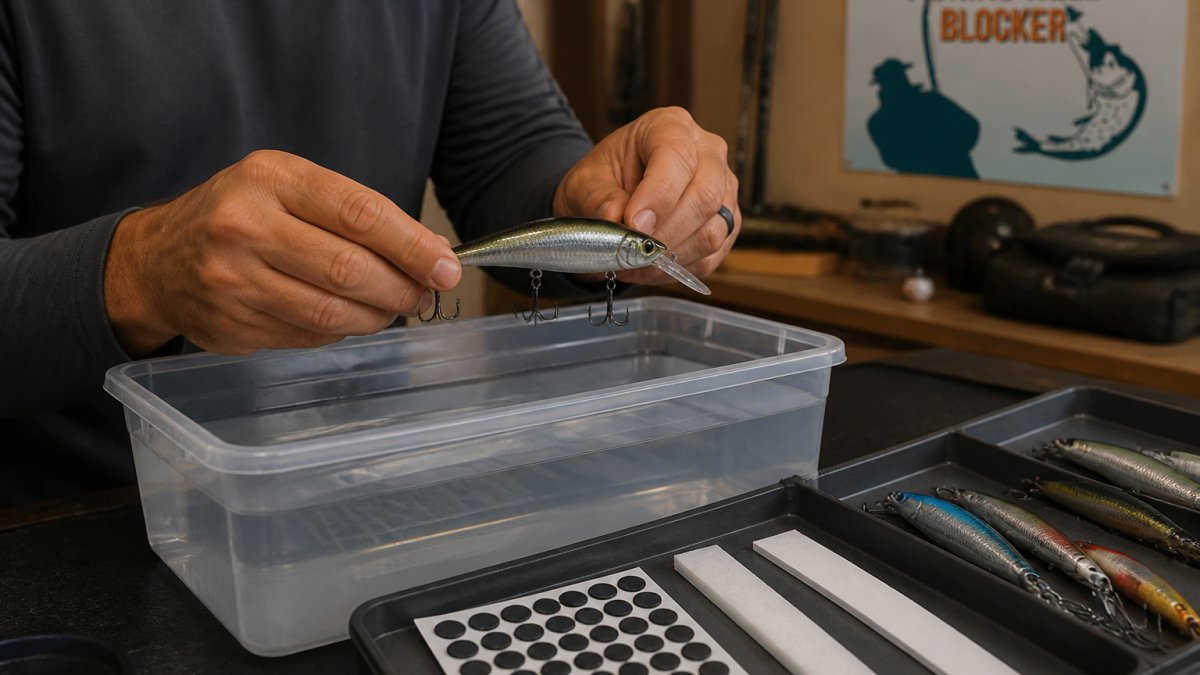
Step 1: Establish a Baseline in Water
Fill a clear tank, a bucket, or a calm stretch of shallows. Tie on the bait with the line and snap you plan to fish. Drop it in and watch three things: does it float, sink, or hang? Does it sit level or nose-down? Does it rest where you want it in the water column?
Write down what you see. A bait that slowly sinks needs weight removed or buoyancy added. A bait that floats up needs a little weight. Testing first saves you from adding hardware you did not need. This baseline is your reference point for every change that follows.
Step 2: Correct Sink or Float with Suspend Dots and Strips
Suspend dots and strips are small adhesive weights that stick to the bait's belly or sides. Add them one at a time and retest after each piece. A slow sink usually takes very little weight to correct, so go small.
- Slow sink: add a small dot near the front treble.
- Floats up: add weight along the belly, centered.
- Nose-down: move weight toward the tail.
- Nose-up: move weight toward the nose.
Keep the dots symmetrical. Weight on one side only will make the bait roll. After each addition, drop the bait back in the water and watch for level suspension. Stop as soon as it hangs in place; more weight is not better.
Step 3: Fix a Bait That Tracks Crooked or Rolls
A bait that runs to one side usually has a bent line tie or an off-center weight. Check the line tie first and bend it slightly opposite the drift. If the bait rolls, your added weight is likely too high on the body or uneven. Move it lower and center it.
Watch out: over-weighting is the most common tuning mistake. A bait loaded too heavy loses its glide and just plows through the water. If the bait still rolls after centering weight, inspect the bill for alignment and check that the split rings are not bent.
Step 4: Verify the Tune Before You Fish
Before you make a cast, do a final verification. Tie on the bait with the line you will actually fish and drop it in the water again. It should hang level, pause in place, and sit at the depth you want. Twitch it gently in the tank or shallows and watch for a straight dart with no roll. If it passes, you are ready. If not, go back one step and adjust only the last change you made.
A repeatable procedure like this turns tuning from guesswork into a routine you can run at the dock in a few minutes. Keep a small notebook or note on your phone with the baseline and each change so you can repeat a winning tune on the same bait model.
Jerkbait Suspending vs Floating: Choosing the Right Action
Suspending jerkbaits hang in place during the pause, which is why they shine in cold water and around pressured fish. Floating jerkbaits rise on the pause, which suits shallow cover and aggressive, warm-water bites. Neither is better. They solve different problems.
Pick a suspending model when fish are sluggish and need a long look at a motionless bait. Pick a floating model when you want the bait to climb over shallow grass or wood. Many anglers keep both and switch by season.
How to Fish a Jerkbait in Cold Water
Cold water slows bass down, so your cadence has to slow down with it. The classic cold-water approach is a twitch-and-pause retrieve with long pauses. Two or three sharp twitches, then let the bait sit. Sometimes ten seconds. Sometimes longer.
The pause is where the strike happens. A suspending bait that stays in place during that pause gives a sluggish fish time to commit. Speed up only when fish show activity. A slack-line twitch, where you twitch with a bit of slack in the line, gives the bait a softer, more natural dart.
Best Rod and Reel for Jerkbait Fishing
A medium-power, moderate-fast rod in the six-and-a-half to seven-foot range is the standard jerkbait setup. It loads well for casting light baits and gives you enough tip to work the twitch without over-muscling it. Pair it with a reel that has a smooth drag and a gear ratio that lets you pick up slack quickly.
Line choice matters more than most anglers think. Fluorocarbon sinks and can drag a suspending bait down; monofilament floats and can lift it. That is why line belongs in your tuning decisions, not just your tackle box. If you want a deeper look at matching line to your bait, see our guide on choosing the right line for weedless fishing.
Hook and Weight Changes: Trade-Offs That Affect Action
Swapping treble hooks or adding weight changes how a bait sits and moves, but each option carries trade-offs in action, casting, and snag risk. Use this comparison to choose the right modification for your conditions.
- Heavier hooks: more weight, slower rise, watch for a nose-down tilt. They can improve hookups on short strikes but may reduce glide and increase snag risk in cover.
- Lighter hooks: livelier action, but the bait may float up. They cast slightly farther and snag less, but hooksets on pressured fish can suffer.
- Hook shank weights: precise tuning, but easy to overdo. They let you fine-tune suspension without external dots, yet too much weight kills the dart.
- Larger hooks: better hookups, but they can foul and change the glide. They also add wind resistance and reduce casting distance.
- Suspend dots and strips: removable and adjustable, but they can peel in cold water and collect debris. They are best for temporary tunes at the dock.
Retest after every hardware change. Change one thing at a time: swap hooks first, test, then add weight only if needed. If you want to understand why a bait collects weeds in the first place, our breakdown of why fishing lures collect so many weeds covers the causes and fixes.
Tuning Decisions by Water Temperature, Clarity, and Line
Water temperature, clarity, and line all push buoyancy around, so your tuning should shift with conditions. Use this chart as a starting point.
| Condition | Bait Action | Tuning Move | Retrieve |
|---|---|---|---|
| Cold water, clear | Slow, level suspend | Add small suspend dots until level | Long pauses, slack-line twitch |
| Cold water, stained | Slow suspend, more flash | Keep weight minimal, use rattles | Slow twitch-and-pause |
| Warm water, clear | Neutral suspend | Balance to hang in place | Faster cadence, short pauses |
| Warm water, stained | Slight float | Remove weight, lighter hooks | Aggressive twitch-and-pause |
| Heavy fluorocarbon | Tends to sink | Remove a dot or two | Test before fishing |
Salinity and dense line add drag and lift, so retest whenever you change line class or move to a different water body.
Keep Your Tuned Jerkbait Working Through Weeds
All that tuning work means nothing if a weed grabs your bait on the first cast. A perfectly balanced suspending jerkbait still fouls in grass, and a fouled bait has no action at all. That is where the Fishing Weed Blocker earns its place in the box. It grabs weeds before they reach your lure, so your tuned presentation stays clean cast after cast.
If your tuned bait starts snagging in cover, our guide on how to fish dense weeds with spinning tackle shows how to keep working it. For more ways to keep the bait clean, see how to keep weeds off fishing lures. And once your rod and reel are dialed in, here is a checklist of must-have accessories for bass anglers.
Frequently Asked Questions
How do you tune a jerkbait that swims to one side?
A jerkbait that tracks to one side usually has a bent line tie or a hook hanging off-center. First, sight down the bait from the nose and check that the line tie points straight ahead; gently bend it back with pliers if it is off. Next, confirm both treble hooks hang freely and are not fouled on the split rings. Test the bait in clear water at a slow retrieve. If it still veers, swap to a slightly heavier front hook to add nose weight and stabilize the track.
What rod and reel setup works best for jerkbait fishing?
A 6-foot-6 to 7-foot medium-power, moderate-fast or fast-action casting rod pairs well with a high-speed baitcaster in the 7.1:1 to 8.1:1 range. The softer tip lets you work a slack-line twitch without overloading the bait, while the faster retrieve picks up line quickly between pauses. Spinning gear works too, especially for lighter suspending models. Use 8- to 12-pound fluorocarbon for clear water and to help the bait reach its suspend depth without adding extra weight.
Can changing hooks affect a jerkbait's action?
Yes. Treble hooks are a major tuning lever because their weight sits at the belly and tail, which changes buoyancy and balance. Going to a heavier hook shank makes the bait sink faster or hang nose-down; switching to a lighter hook can make it float or sit higher. Replace hooks one at a time and test in water after each change. Keep the same size hook but vary wire gauge to fine-tune suspension without altering the bait's profile.
Should a jerkbait suspend, float, or sink?
Most bass anglers want a suspending jerkbait that stays in place during the pause, because that hang time triggers strikes. A floating model is useful in shallow cover where you need the bait to rise over snags, while a slow-sinking bait works when fish are deeper or sluggish. Tune toward suspension with suspend dots or strips, and adjust for water temperature: cold water is denser, so a bait that suspends in summer may float in winter until you add weight.
Tuning a jerkbait takes a few minutes at the dock, but the payoff is a bait that hangs, darts, and pauses exactly how you want. If weeds keep wrecking that presentation, the Fishing Weed Blocker is built to catch them before they cover your bait. It is a patented, award-winning device sold in a pack, designed for trolling and bait fishing, and engineered to cast clean and run with minimal drag. Get started with Fishing Weed Blocker and keep your tuned lure working through the thickest cover.
