
Table of Contents
- Beginner Fishing Rod and Reel Setup for Pond Success
- Fishing Line Selection for Pond Conditions
- Hooks and Hook Styles for Different Fish Species
- Best Bait for Pond Fishing and Lure Options
- Building Your Pond Fishing Tackle Box Essentials
- Catch-and-Release Fishing Gear and Safe Handling
- Weed Management: Keeping Your Bait and Lure Clear
- Species-Specific Tackle for Bass, Bluegill, and Panfish
- Frequently Asked Questions
Last Updated: October 10, 2026
Beginner Fishing Rod and Reel Setup for Pond Success
A solid beginner fishing rod and reel setup is the essential tackle for pond fishing beginners, and getting this right makes every other decision easier.
For most pond anglers, a spinning rod paired with a spinning reel offers the best balance of ease and versatility. A 6-foot to 6.5-foot medium-power rod handles everything from small bluegill to bass without wearing you out. Pair it with a spinning reel that holds at least 150 yards of line, and you're ready to cast. The spinning reel's open bail design makes it forgiving for beginners, and the smooth drag system keeps your line from snapping when a fish pulls hard.
We recommend starting with a combo package rather than buying rod and reel separately. A quality combo in the $40-$80 range gives you matched components that work together smoothly. You avoid the guesswork of balancing reel size to rod power, and the manufacturer has already tested the pairing for you.
Test the rod's weight in your hands before buying, a lighter rod reduces fatigue during long days on the water.
Fishing Line Selection for Pond Conditions
Monofilament line is the best choice for pond fishing beginners because it's forgiving, affordable, and works well in most conditions.
Monofilament stretches slightly when a fish pulls, acting as a shock absorber and preventing line breakage on sudden runs.
Matching line weight to water conditions and season:
In clear water, use 8-pound test for better casting and less visibility. In murky water, use 10-12 pound test for strength against vegetation.
Vegetation density is the single biggest factor in line choice: light grass (8-10 lb), moderate coverage (10-12 lb), dense vegetation (12-15 lb). Heavier line also forgives casting mistakes.
Fluorocarbon is invisible underwater but costs 50-100% more.
Braided line offers excellent sensitivity and casts farther, but it's more visible to fish, can damage rod guides, and costs significantly more. Master monofilament before switching to braided.
Replace your line once per season or whenever you notice nicks or fraying. A fresh spool costs $4-8 and takes 10 minutes to install.
Hooks and Hook Styles for Different Fish Species
Using the right hook dramatically improves your catch rate.
For bluegill and panfish, use small hooks (#6 to #10) with thin wire. Circle hooks work exceptionally well for catch-and-release because they hook fish in the corner of the mouth.
Bass fishing calls for larger hooks (#2 to #4) with stronger wire. Circle hooks excel at self-setting when a bass takes your offering.
Best Bait for Pond Fishing and Lure Options
Live bait consistently outperforms artificial lures for beginners. Earthworms work for nearly every pond fish species, thread them onto your hook leaving part moving freely for natural action.
Minnows work better for bass and larger panfish. A 2-3 inch minnow on a #2 hook cast near weeds or drop-offs attracts aggressive strikes. Keep minnows in an aerated bucket to maintain their liveliness throughout your fishing day.
Artificial lures require more skill but offer advantages once you master them. Soft plastic worms, small crankbaits, and topwater plugs all produce in pond conditions. Start with a basic soft plastic worm in 4-5 inch lengths. These work year-round and teach you casting and retrieval rhythm without the complexity of live bait management.
Spinnerbaits create vibration and flash that draw fish from cover. A 1/8 to 1/4 ounce spinnerbait works well in weedy areas when paired with a weed guard or a Fishing Weed Blocker device that removes debris before it reaches your lure.
Building Your Pond Fishing Tackle Box Essentials
A well-organized tackle box keeps your essential tackle for pond fishing beginners accessible and prevents tangled lines and lost time fumbling for what you need.
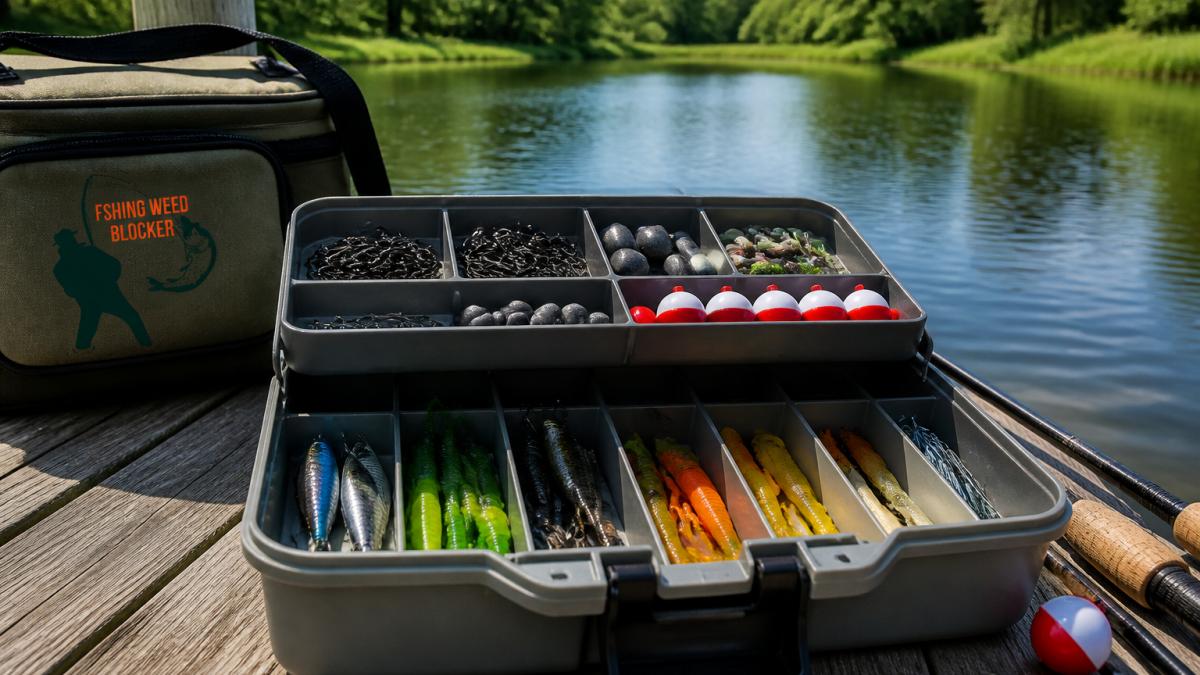
Starter Kit (First Pond Trip), $25-35:
Buy these items first. They cover 80% of beginner pond fishing scenarios:
- One compartmentalized tackle box (plastic, 2-3 trays)
- Hooks: #6, #8, #10 (for bluegill and panfish), and #2, #4 (for bass), buy a mixed assortment pack
- Split shot sinkers: sizes BB and #4 (for adjusting bait depth)
- Cork or foam bobbers (3-4 pieces)
- Snap swivels (prevent line twist when using spinners)
- One soft plastic worm (4-5 inches, natural color like green or brown)
- One small crankbait (1.5-2 inches, natural finish)
- Needle-nose pliers (for hook removal)
- Line cutter or small scissors
This kit lets you fish for bluegill, panfish, and small bass without guessing. You can rig live bait on a bobber, cast soft plastics, and handle fish safely.
Mid-Range Addition (After 3-4 Trips), $30-50:
Once you've caught fish and know what your local pond holds, add:
Hook Guardian | Fishing Hook & Lure Safety Holder | 2 Pack| Rod-Mounted Safe →
- One spinnerbait (1/8 to 1/4 ounce, silver or gold)
- Additional soft plastic worms in different colors (dark colors for murky water, lighter colors for clear water)
- Small jigs (1/16 to 1/8 ounce) for panfish and perch
- A soft mesh net with knotless netting (for safe catch-and-release)
- Extra monofilament line (8-lb and 10-lb test)
- Bobber stops (small beads that slide on your line to set exact depth)
This tier lets you adapt to different water conditions and fish species without carrying unnecessary weight.
Optional Upgrades (After 10+ Trips), $40-80:
Add these only if you've identified specific needs:
- Topwater plugs (for bass in low-light conditions)
- Fluorocarbon leader material (for clear-water situations)
- A headlamp or small flashlight (for early morning or evening sessions)
- A small first-aid kit (for hook punctures and minor cuts)
- Tackle backpack instead of a box (if you hike to remote ponds)
- Catch-and-release kit with hook removal tools
Organization strategy:

The American Fishing Association guidelines recommend keeping tackle organized by species and technique so you're not searching during prime fishing hours. Compartmentalized boxes work better than loose tackle scattered in a bag.
What NOT to buy as a beginner:
Avoid the temptation to fill your box with every color and size variation. A single soft plastic worm in green or brown outfishes a tackle box full of untested colors.
As you develop preferences, your tackle box will grow. Resist the urge to carry everything on day one.
Catch-and-Release Fishing Gear and Safe Handling
Releasing fish safely protects the resource and allows other anglers to enjoy the same pond. Proper handling gear makes this easier and reduces injury to the fish.
A net with a soft, knotless mesh prevents damage to the fish's protective slime coating. Wet your hands or gloves before handling any fish you plan to release. Never squeeze the fish or grip it by the gills.
Long-nose pliers make hook removal quick and clean, minimizing the time a fish spends out of water. A catch-and-release kit from Fishing Weed Blocker includes the Hook Guardian, a safety device that securely holds hooks and lures on your rod to prevent accidental injuries, protecting both you and others on the water.

Revive exhausted fish by moving them gently back and forth in the water, allowing oxygen to flow through their gills. Never throw a tired fish back aggressively. A few seconds of careful handling dramatically improves survival rates.
Weed Management: Keeping Your Bait and Lure Clear
Weeds are the biggest frustration for pond anglers. They tangle around your line, cover your bait, and force constant retrieves to clear your presentation. This kills your catch rate and wastes time.
Vegetation grows thicker in shallow areas and along shorelines where sunlight penetrates. Fish use weeds for cover, so you need to fish near them, but you also need your bait visible. Cast parallel to weed lines rather than directly into dense vegetation when starting out. As your skills improve, you can work the edges more aggressively.
A weed guard on your lure helps, but it's not foolproof. The Fishing Weed Blocker device solves this problem by capturing weeds before they reach your bait. The patented design grabs debris as it passes through the water, keeping your hook and lure presentation clear. It casts like a rocket and flows through the water with minimal drag, stacking neatly in your tackle box.
Species-Specific Tackle for Bass, Bluegill, and Panfish
Different pond species require slightly different approaches, but the fundamentals remain the same. Understanding what each species prefers improves your success rate dramatically.
Bass fishing demands larger hooks and stronger line because bass are aggressive and powerful. Use 10-12 pound monofilament with #2 to #4 hooks. Bass respond to movement, so active retrieves with soft plastics or crankbaits work better than static presentations.
Bluegill and panfish prefer small hooks and lighter presentations. A #8 or #10 hook with 6-8 pound line lets you feel subtle bites. These fish school in shallow water, especially near vegetation. Live worms or small minnows work consistently.
Perch and other bottom feeders prefer live bait or small jigs near the lake floor. A split shot sinker above your hook keeps bait on the bottom where these fish feed.
Most pond beginners catch more fish by starting with bluegill and panfish. They're less wary than bass, bite readily, and teach you the fundamentals without frustration.
| Species | Best Hook Size | Preferred Line Test | Top Bait/Lure | Depth Zone |
|---|---|---|---|---|
| Bluegill | #8-#10 | 6-8 lb | Live worms, small jigs | Shallow (2-6 ft) |
| Bass | #2-#4 | 10-12 lb | Soft plastics, crankbaits | Deep cover (4-12 ft) |
| Panfish | #6-#10 | 6-8 lb | Worms, bobber rigs | Shallow weeds (2-5 ft) |
| Perch | #6-#8 | 8-10 lb | Live minnows, jigs | Bottom (6-15 ft) |
Frequently Asked Questions
What is the best tackle setup for a complete beginner pond fishing?
Start with a spinning rod and reel combo (5.5 to 6 feet) paired with monofilament line (6-10 pound test). Add a basic tackle box with circle hooks (sizes 2-6), a few bobbers, split shot sinkers, and live bait like worms or minnows. This beginner fishing rod and reel setup handles most pond fish species and costs under $100. Many beginners overlook weed management, adding a Fishing Weed Blocker ($15.97) prevents frustration when fishing weedy areas.
What is the best bait for pond fishing for different species?
Live worms work for bluegill and panfish; small minnows catch bass and larger panfish. For catfish, use chicken liver or stink baits. The best bait for pond fishing depends on what species inhabit your pond. Start by asking local anglers what works. Live bait generally outperforms artificial lures for beginners because it requires less skill to present effectively. Match bait size to your target fish, small baits for bluegill, larger minnows for bass.
How do I organize my pond fishing tackle box for easy access?
Organize your pond fishing tackle box by separating hooks by size and style, storing sinkers and bobbers in small compartments, and keeping line spools upright. Place frequently used items (bobbers, split shot) in front compartments. Use small ziplock bags for soft plastics and live bait containers. Keep a pair of pliers and line cutters in an easily accessible pocket. This setup saves time on the water and prevents tangled line. The Hook Guardian ($14.99 single or $24.99 two-pack) keeps your rods safe during transport and storage.
What tackle do I need for catch-and-release pond fishing?
Use circle hooks (which hook fish in the mouth, not the throat) and practice gentle handling with wet hands to protect the fish's protective coating. Bring a net with soft mesh, a de-hooker tool, and a measuring tape for photos. Avoid treble hooks when possible. Catch-and-release fishing gear prioritizes fish safety, proper equipment reduces injury and improves survival rates. Always check local regulations before practicing catch-and-release, as some areas have specific rules about species and size limits.
Will weed blocker devices actually work in shallow ponds with light vegetation?
Yes. The Fishing Weed Blocker ($15.97) grabs weeds and debris before they reach your bait, even in light vegetation. It casts smoothly and flows through the water with minimal drag, so it won't slow your retrieve or affect lure presentation. It works for both trolling and bait fishing. Even light weed coverage can ruin a presentation by obscuring your bait or lure, a weed blocker ensures your offering stays visible and attractive to fish in any pond condition.
Pond fishing success starts with the right gear and honest assessment of what you actually need. A basic rod-and-reel combo, simple tackle selection, and one quality tool like the Fishing Weed Blocker eliminate most beginner frustrations. Focus on learning to cast, read water, and handle fish carefully. The fish will follow.