
Table of Contents
- Why Weedless Hooks Matter for Topwater Fishing
- Types of Weedless Hooks and How They Work
- How to Rig Weedless Hooks for Bass
- Preventing Weeds on Fishing Lures
- Weedless Topwater Rigs That Work
- Choosing the Right Hook Size and Material
- Troubleshooting Missed Hooksets and Improving Your Hookup Ratio
- Frequently Asked Questions
Last Updated: September 28, 2026
Why Weedless Hooks Matter for Topwater Fishing
Weedless hooks solve one of the most frustrating problems in fishing: vegetation wrapping around your lure before it reaches your target. When you're working topwater lures in heavy cover, a standard hook catches weeds on every cast, turning your presentation into a soggy mess and killing the action that attracts bass.
The best weedless hooks for topwater lures let you fish aggressive areas other anglers avoid. You cast into lily pads, thick grass, and fallen timber without constantly stopping to clear debris. Your lure stays clean, your action stays natural, and your hookup ratio stays high. The right weedless setup transforms frustrating sessions into productive ones.
Topwater fishing demands precision. Your lure's movement matters as much as where it lands. A weed-covered lure doesn't walk, pop, or create the surface disturbance that triggers strikes. More importantly, weeds prevent proper hook penetration when a fish commits. You miss hooksets because the hook point can't reach the fish's mouth through the vegetation layer.
The mechanics are straightforward: weedless hooks use guards, offsets, or wire designs that protect the hook point while allowing it to clear weeds on the retrieve. When a bass strikes, the design flips the hook point into position for a solid hookset. This balance between weed avoidance and hook penetration separates effective topwater rigs from expensive frustration.
Types of Weedless Hooks and How They Work
Understanding hook design is the foundation of choosing the right weedless hooks for topwater lures. Three main categories dominate: wire guards, offset hooks, and wide gap designs. Each works differently, and each excels in specific cover conditions.
Wire Guard Designs
Wire guard hooks feature a single strand of wire running from the eye to the hook point. This wire deflects weeds and debris while the hook point remains exposed but protected from most snags. When a fish strikes, its mouth pressure pushes the wire aside, allowing the point to penetrate.
Wire guards excel in moderate cover, sparse vegetation, scattered sticks, and light weed mats. They maintain excellent lure action because they add minimal weight and don't alter the hook's profile. The thin wire creates minimal resistance in the water, so your topwater lure moves naturally without drag.
The trade-off appears in heavy cover. Dense vegetation can bend or break the wire, and thick weeds sometimes prevent the wire from clearing on the hookset. In extremely heavy cover, wire guards occasionally fail to deliver the penetration you need. But for general topwater fishing where you're targeting specific cover pockets, wire guards remain the most versatile option.
Offset and Wide Gap Hooks
Offset hooks bend the eye slightly forward of the hook shank. This design creates a mechanical advantage that helps the hook point find the fish's mouth even when weeds are present. Wide gap hooks feature an exaggerated distance between the hook point and the shank, giving the point more room to swing into position.
Offset designs work exceptionally well for soft plastic rigging. When you rig a stick bait on an offset hook, the offset naturally positions the lure body to protect the hook point. The hook rides slightly to the side of the bait, so vegetation contacts the plastic rather than the hook.
Wide gap hooks offer superior penetration in heavy cover because the increased gap gives the point more freedom to find its target. However, wide gap hooks sometimes catch weeds more readily than offset designs because the exposed point sits further from the lure body. You're trading some weed avoidance for better hookup ratio in situations where fish commit hard.
How to Rig Weedless Hooks for Bass
Proper rigging technique determines whether your weedless hook delivers results or becomes an expensive frustration. The rig method matters as much as the hook design itself.
Wacky Rigging Technique
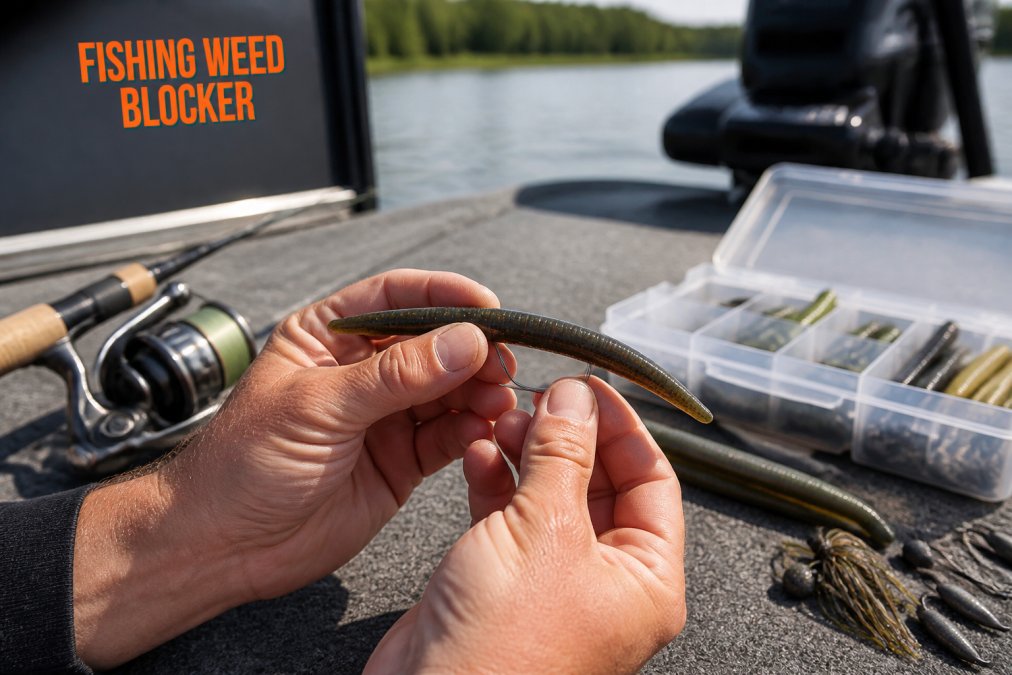
Wacky rigging threads the soft plastic through the middle of the bait rather than through the head. This creates a unique action where both ends of the stick bait move independently, creating an erratic, wounded-minnow presentation that triggers aggressive strikes.
Start by positioning your weedless hook point at the center of your soft plastic. Push the hook through the plastic so the eye sits flush against the bait. The hook point should protrude cleanly without the plastic bunching or twisting.
The wacky rig excels in vegetation because the plastic body hangs below the hook, protecting the point from direct contact with weeds. The hook rides above the bait, so it clears most vegetation on the retrieve. When a bass strikes, the wacky rig's loose connection to the plastic allows the hook to move independently and penetrate effectively.
Wacky rigs work best with finesse presentations. Use lighter line (8-12 pound fluorocarbon), smaller hooks (1/0 to 2/0), and subtle rod movements. The wacky rig's appeal lies in its natural, minimalist action, aggressive retrieves diminish its effectiveness.
Texas Rig Setup
The Texas rig threads the hook through the head of the soft plastic, burying the hook point inside the bait. This creates maximum weed protection while maintaining a simplified profile that casts easily and moves naturally through the water.
Insert the hook eye into the plastic head first. Run the hook shank through the center of the bait body, then push the point back through the plastic so it sits just inside the surface. The hook point should be barely visible, barely, not completely hidden.
Texas rigged soft plastics work in heavy cover where wacky rigs struggle. The buried hook point rarely catches weeds because the plastic body surrounds it completely. The trade-off is slightly reduced sensitivity and a marginally slower hookset compared to exposed-point rigs.
Texas rigging works with both offset and wide gap weedless hooks. Offset hooks naturally align with the plastic body, while wide gap hooks offer more hook penetration. Choose based on your cover density and target fish size.
Preventing Weeds on Fishing Lures
Beyond hook design, several techniques reduce weed accumulation on your lures and keep your presentation clean throughout your fishing session.
Retrieve speed matters significantly. Fast retrieves create water pressure that helps weeds slide off your lure. Slow retrieves allow weeds to accumulate and wrap around the hook and body. When you're fishing in vegetation, maintain steady, moderately fast retrieves that keep water moving over your lure.
Lure selection influences weed pickup. Topwater lures with simplified bodies shed weeds more effectively than bulky designs. Hollow body frogs naturally shed vegetation because their smooth plastic body offers nothing for weeds to grip. Stick baits and pencil poppers create less drag and accumulate fewer weeds than bulkier topwater options.
Line choice affects how effectively weeds clear during the retrieve. Fluorocarbon line creates less water resistance than monofilament, allowing weeds to slide off more easily. Braided line offers minimal resistance but provides less abrasion resistance in heavy cover. Most experienced anglers use fluorocarbon for topwater fishing in vegetation because it balances weed shedding with durability.
Rod angle influences weed clearing.
Weedless Topwater Rigs That Work
Certain rig combinations have proven themselves repeatedly in heavy cover. These combinations pair specific hook styles with proven topwater lures and rigging techniques.
Hollow Body Frog Rigging
Hollow body frogs are among the most weed-resistant topwater options available. Their design inherently protects the hook point while delivering an irresistible surface disturbance. Most hollow body frogs come pre-rigged with weedless hooks, but understanding the setup helps you maintain and upgrade them.
Topwater Stick Bait Setup
Stick baits and pencil poppers create enticing surface disturbance and work well with weedless hooks when rigged correctly. The key is maintaining the lure's action while protecting the hook point.
Choosing the Right Hook Size and Material
Hook size and material selection determines how effectively your rig performs in specific conditions. Getting these details right separates consistent success from occasional lucky catches.
Troubleshooting Missed Hooksets and Improving Your Hookup Ratio
Missing strikes consistently indicates a problem with your rig setup, hook choice, or technique. Identifying the cause helps you correct it and dramatically improve your success rate.
| Hookset Problem | Likely Cause | Solution |
|---|---|---|
| Missing strikes in light cover | Hook point too protected | Switch to thinner wire guard or offset hook |
| Missing strikes in heavy cover | Insufficient hook penetration | Upgrade to wider gap hook or Texas rig |
| Consistent slow hooksets | Hesitation or delayed reaction | Practice immediate hook set timing |
| Poor penetration overall | Line stretch or wrong rod power | Switch to fluorocarbon; upgrade to medium-heavy rod |
| Hook point dulling quickly | Low-quality hook material | Invest in high carbon steel hooks from quality manufacturers |
Frequently Asked Questions
What's the difference between weedless hooks and standard hooks?
Weedless hooks feature a wire guard or offset design that shields the hook point from catching vegetation and debris. Standard hooks expose the point directly, making them snag in heavy cover. The guard on weedless hooks keeps your lure's action natural while reducing snags by 60-80%, letting you fish thick vegetation where bass hide without constant line breaks.
How do you rig weedless hooks for bass in heavy cover?
For wacky rigging, thread a soft plastic stick bait through its middle on a weedless hook, leaving both ends free to wiggle. For Texas rigs, slide a bullet sinker onto your line, tie on the weedless hook, and insert the hook point through the plastic's head, burying it slightly to hide the barb. Both methods keep the hook point protected while delivering the natural presentation bass strike.
Do weedless hooks affect lure action or casting distance?
Quality weedless hooks with proper weight distribution cast nearly as far as standard hooks. The wire guard adds minimal drag, allowing your lure to move through water with natural action. However, lighter wire guards work better for finesse presentations, while heavier guards suit dense vegetation. Match your guard style to cover density, thicker guards for heavy weeds, lighter for open water with scattered vegetation.
What hook size should I use for topwater weedless fishing?
Hook size depends on your lure and target species. For soft plastics and stick baits, 2/0 to 4/0 hooks work well for largemouth bass. Smaller sizes (1/0 to 2/0) suit finesse presentations and lighter lures, while larger sizes (5/0 to 8/0) handle bigger baits and saltwater applications. High carbon steel hooks resist corrosion and maintain sharpness longer, improving your hookup ratio in freshwater and saltwater environments.