
Table of Contents
- Why Weedless Lures Win in Shallow Water
- How Weedless Lures Work: Weed Guards vs. Weedless Hooks
- Best Weedless Lures for Shallow Water
- How to Rig a Weedless Lure
- Fishing in Shallow Weeds: Reading Cover and Depth
- Balancing Snag Resistance With Hook-Up Rate
- Conclusion
- Frequently Asked Questions
Last Updated: October 21, 2026
Why Weedless Lures Win in Shallow Water
The benefits of using weedless lures in shallow water come down to one trade: more time fishing, less time fixing fouled tackle. At Fishing Weed Blocker, we build gear around that exact problem.

A lure that slides through cover keeps its hook point clear and its action natural, more casts, cleaner presentations, and fish that never see a bait dragging a salad.
Fewer Snags, More Casts
Every snag costs time: stop casting, reel in, pick weeds off the hook, reset. Do that a dozen times an hour and your day disappears into tackle maintenance.
Weedless lures cut that cycle. A weed guard or covered hook lets the bait slip past grass stems and pad edges instead of grabbing them. You keep the rod moving.
- More casts per hour in the same water
- Less lost tackle to break-offs in heavy cover
- Fewer fouled hooks that ruin a good retrieve
Access to Water Other Anglers Skip
Shallow, weedy pockets get ignored because they eat tackle. That is exactly why they hold fish. Bass use grass edges and pad fields for shade and ambush cover, and pressured fish often sit in the thick stuff other anglers avoid.
A weedless setup opens that water: cast into the slop, work the edges, and pull fish out of places a treble-hook bait cannot survive.
How Weedless Lures Work: Weed Guards vs. Weedless Hooks
A weedless lure is any bait built so the hook point stays protected from vegetation until a fish strikes.
A weedless hook offsets the point or tucks it into the bait body itself. Texas rigs and many soft-plastic setups use this approach.
| Design | How It Protects | Best Cover | Trade-Off |
|---|---|---|---|
| Weed guard | Bristles or wire deflect vegetation | Grass, pads, brush | Can soften hooksets |
| Weedless hook | Point tucked in bait or offset | Soft plastics, heavy slop | Needs a firm hookset |
| Covered-hook bait | Hook rides inside the body | Dense weeds, timber | Exposed point on strike |
The Texas rigging basics from Bassmaster walk through how tucking the point changes both snag resistance and hook-up.
Best Weedless Lures for Shallow Water
The best weedless lure for shallow water is the one matched to the cover in front of you, not the one that looks best in the box. Treat heavy cover as several conditions, grass, lily pads, brush and wood, sparse weeds, and open shallow flats, because each punishes a different part of your presentation. Use this guide as a starting point, then adjust for water clarity and fish mood.
Grass and Hydrilla
Mat-forming grass is where a Texas-rigged soft plastic earns its keep. A creature bait or ribbon-tail worm with the hook point barely tucked into the plastic slides over grass stems and drops into the holes. A weedless swimbait covers water along a grass edge and triggers reaction strikes. Keep the bait straight on the shank so it tracks true; a bait that rolls will wrap the line and foul the hook.
- Dense grass: Texas-rigged plastic, 3/0 to 5/0 offset hook, pegged weight if you need to punch through the mat.
- Grass edges: weedless swimbait or spinnerbait to cover water and find the active fish.
- Scattered grass: a slow topwater or swimbait that rides above the strands.
Lily Pads
Pads are a surface canopy, so the presentation has to ride over the leaves and drop into the gaps. A hollow-body topwater with a covered hook is the classic pad bait: twitch, let it sit, twitch again, most strikes come on the pause. When fish hold under the pads, a Texas-rigged plastic or weedless jig pitched into the gaps gets down to them.
Brush and Wood
Wood is unforgiving. A weedless jig with a fiberguard or wire guard is the most controllable bait around brush piles, laydowns, and stumps because you can feel the cover and pick the bait through it. Flip or pitch it into the shade, let it fall on a semi-tight line, and watch for the tick. A Texas-rigged plastic also works, but the exposed body takes more abuse from bark and branches.
Sparse Weeds and Open Shallow Flats
When cover thins out, trade some snag resistance for casting distance and flash. A spinnerbait's wire frame sheds sparse weeds and its blades add flash in stained water. A weedless swimbait covers water fast and draws fish from a distance. On open flats, a slow topwater or swimbait is often the most productive shallow-water choice because fish key on silhouette and movement rather than cover.
A Quick Selection Framework
Use this order of questions before you tie on a bait:
- What is the cover? Grass, pads, wood, sparse weeds, or open flat.
- Where in the water column are the fish? Surface, mid-column, or bottom.
- How clear is the water? Clear water favors natural profiles and slower retrieves; stained water favors flash and vibration.
- How pressured are the fish? Pressured shallow fish often want a smaller, more natural presentation.
Match the answer to the bait: Texas-rigged plastic for dense grass and wood, topwater for pads and low light, spinnerbait for grass edges and stained water, weedless swimbait for covering water, and a weedless jig for brush and hard cover. The lure is only half the decision, the retrieve and hookset have to match it.
How to Rig a Weedless Lure
Rigging a weedless lure takes about a minute and decides whether your bait snags or slides through cover. Follow these steps for a Texas-style weedless rig.
- Tie on your hook. Use a 3/0 to 5/0 offset worm hook for most soft plastics.
- Insert the point into the nose of the bait and push it through about a quarter inch.
- Exit the bait and slide the bait up to the hook eye.
- Rotate the bait so it sits straight on the shank.
- Run the point back into the body and bring it just to the surface, tucking it slightly into the plastic.
- Check the fall. The bait should sink straight, not spiral.
A bait that spirals means the plastic is crooked. Re-seat it before you cast.
Fishing in Shallow Weeds: Reading Cover and Depth
Reading shallow cover separates consistent anglers from frustrated ones. Look for edges first: where grass meets open water, the gap between pad clusters, the shade line along a bank.
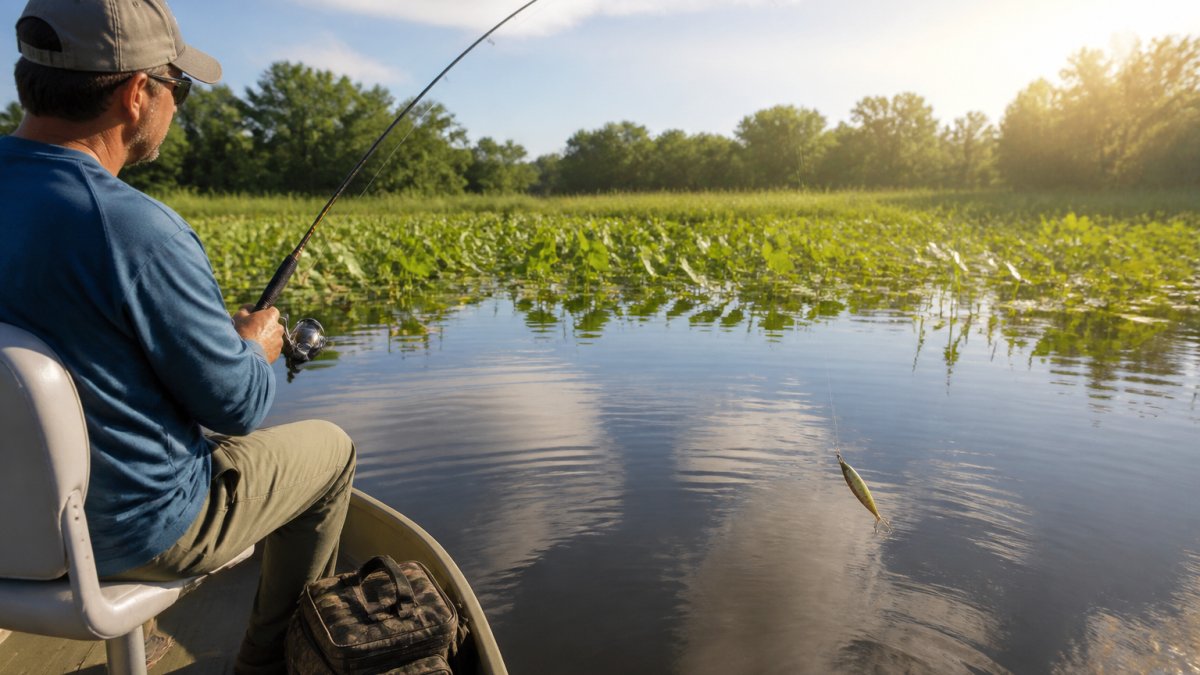
Then match your lure to the density:
- Light, scattered weeds: a weedless swimbait or spinnerbait
- Dense grass and pads: a Texas-rigged plastic or topwater
- Brush and wood: a weedless jig
Water clarity and light matter too. In clear, bright conditions fish get spooky, so use a natural profile and slow retrieve. In stained water, add flash and vibration. Keep noise down: a quiet approach in skinny water keeps fish from scattering before you cast.
Balancing Snag Resistance With Hook-Up Rate
More snag resistance usually means a lower hook-up rate, and the anglers who catch fish in shallow cover manage that trade deliberately instead of burying the hook and hoping. The goal is not a snag-proof bait, it is a bait that slides through cover and still drives the point home when a fish eats it.
How the Hook Point Position Changes the Trade
On a Texas rig, the hook point can sit in three basic positions, and each one changes both snag resistance and hook-up:
- Fully buried (point inside the plastic): maximum snag resistance, slowest hook-up. Best for dense grass, slop, and punching. Requires a hard, sweeping hookset to drive the point through the plastic and into the fish.
- Skin-hooked (point just barely through the surface): a middle ground. The point is covered enough to slide over most stems but close enough to the surface to hook with a firm set. This is the most versatile position for shallow grass and pads.
- Exposed (point clear of the plastic): easiest hook-up, least snag resistance. Use it only in sparse cover or open water, or when fish are short-striking and you need every advantage.
Experienced shallow-water anglers start skin-hooked and bury the point deeper only when the cover forces it. Getting bit but not hooking up? The point is too deep. Snagging on every cast? Too shallow.
Setting the Hook in Cover
A buried point needs a firm, sweeping hookset, not a wrist snap. Reel down until the line comes tight, then sweep the rod to the side and up in one motion.
After the hookset, keep the rod loaded and get the fish moving toward open water. In pads and grass, a fish that buries itself can wrap the line and come off.
Retrieval That Keeps the Hook Clear
Retrieve speed and angle do as much for snag resistance as hook position. A slow, steady retrieve with the rod tip up keeps a Texas-rigged plastic riding over grass rather than digging in.
For topwater over pads, the pause is the trigger. Twitch, let it sit until the rings fade, then twitch again. For a weedless swimbait, a slow, steady reel with occasional rod-tip sweeps keeps the tail thumping and the bait above the strands.
Troubleshooting Common Failures
- Fouled hook: the point has picked up grass or the bait has slid down the shank. Re-seat the plastic and check the point after every few casts.
- Bait spiraling on the fall: the plastic is crooked on the hook. Slide it straight and re-check.
- Bent weed guard: a wire or fiberguard that has been bent out of shape will not deflect cover. Bend it back gently or replace the bait.
When a Weed Blocker Helps
For trolling and bait fishing in weedy water, a weed-blocking device adds a second layer of protection. Our Fishing Weed Blocker grabs weeds before they reach the bait and keeps the hook clear of debris. It casts clean, runs with low drag, and stacks in a tackle box. At $15.97, it is an easy add for anglers tired of clearing grass off their presentation.
Conclusion
Shallow, weedy water rewards anglers who keep a bait moving. Weedless lures give you that edge, but even the best rig picks up debris on a slow retrieve, which is where a dedicated weed blocker earns its place in the box. Fishing Weed Blocker is a patented, award-winning device that grabs weeds before they cover your bait, protects your presentation, and keeps your hook free so you can focus on the strike.
Frequently Asked Questions
What are the benefits of using weedless lures in shallow water?
Weedless lures let you cast into grass, lily pads, and brush where fish hold without fouling the hook on every retrieve. That means more time with your bait in the strike zone and less time clearing weeds or retying. They also open up shallow flats that snag-prone lures cannot reach, and they reduce lost tackle. The trade-off is a slightly lower hook-up rate on some setups, which you offset by setting the hook hard and keeping hooks sharp.
How do you rig a lure to make it weedless?
For soft plastics, run a offset worm hook through the nose, out the back, and then texas-rig the point back into the body so it sits flat against the plastic. For swimbaits, use a weighted swimbait hook with a screw-lock keeper and bury the point. For jigs, choose a model with a fiber or wire weed guard and trim it to the cover you fish. The goal is a hook point that stays covered until a fish strikes or you set the hook.
Do weed guards affect hook-setting?
Yes, slightly. A stiff weed guard can absorb some of the hookset energy, so you need a firmer, faster sweep to drive the point through the guard and into the fish. Trim guards on lighter cover so they flex more easily, and keep hook points sharp. Many anglers miss fish because they use a soft, sweeping hookset that does not compress the guard. A hard, upward snap fixes most of that.
What lures work best around weeds and heavy cover?
Texas-rigged soft plastics, weedless swimbaits, flipping jigs with weed guards, and spinnerbaits all work well in heavy cover. In shallow water, weightless or lightly weighted soft plastics and hollow-body frogs shine over matted grass, while spinnerbaits cover water along weed edges. Match lure weight to cover density and depth so the bait stays in the strike zone without constantly fouling.