
Table of Contents
- Why Weedless Fishing Setups Keep Your Lure in the Strike Zone
- How to Rig Weedless Soft Plastics for Bass
- Best Weedless Hooks for Soft Plastics
- Fishing Weed Blocker Device Benefits for Trolling and Bait Fishing
- Weedless vs Exposed Hook Setups: When to Switch
- Line, Knots, and Hook Sets: What Most Anglers Miss
- Conclusion: Fish the Cover Others Skip
- Frequently Asked Questions
Last Updated: September 16, 2026
Why Weedless Fishing Setups Keep Your Lure in the Strike Zone
Weedless fishing is the practice of rigging lures and baits so they slide through grass, wood, and rock without snagging on every cast. The core benefit is simple: your lure spends more time in the strike zone and less time fouled with vegetation.
That changes when you rig weedless. The hook point tucks against the bait or sits behind a guard, so it deflects off cover instead of grabbing it. You keep the lure where fish actually live.
Snag-Free Fishing in Heavy Cover
Heavy cover holds fish for a reason. Shade, oxygen, and ambush points concentrate bass, pike, and panfish in places open water simply can't match. The trade-off has always been snags.
A weedless presentation flips that trade-off.
Fewer Lost Lures and More Casts
Every snag costs you two things: a lure and the time spent retying. Anglers who fish heavy cover without a weedless setup often lose tackle at a frustrating rate, and each lost lure means a break in your rhythm.
How to Rig Weedless Soft Plastics for Bass
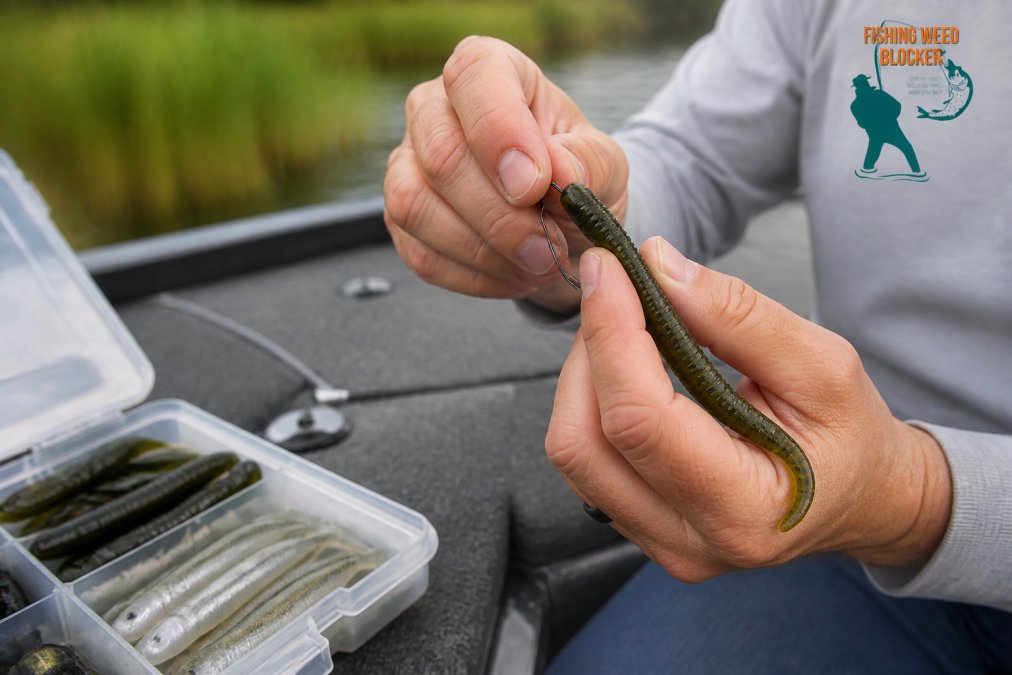
Rigging weedless soft plastics for bass means burying the hook point inside the bait so it can't catch on cover, then rigging it so the hook still drives home on a bite. Here's the process most guides gloss over.
Texas Rig Steps for Grass and Wood
The Texas rig is the workhorse of weedless fishing. Follow these steps:
- Slide a bullet weight onto your line, pointed end up
- Tie on an offset worm hook using a Palomar or improved clinch knot
- Insert the hook point into the nose of the soft plastic and push it through about a quarter inch
- Rotate the bait and bring the hook point back to the body
- Embed the hook point just under the surface of the plastic so it sits skin-hooked
- Slide the weight down to the bait and you're ready to fish
Flipping and Pitching Presentation Tips
Flipping and pitching let you place a bait quietly into tight cover without a long cast. Keep your rod tip low, use a short underhand swing, and let the bait fall on a semi-slack line so it drops vertically.
Best Weedless Hooks for Soft Plastics
The best weedless hooks for soft plastics are offset worm hooks and EWG (extra-wide gap) hooks, chosen by bait size, cover density, and wire gauge. Get this wrong and you'll fight poor hook penetration all day, which is the single biggest reason anglers blame the rig for missed fish.
| Hook Type | Best For | Key Trait |
|---|---|---|
| Offset worm hook | Standard Texas rigs | Classic weedless profile, moderate gap |
| EWG hook | Thick-bodied baits (creatures, beavers) | Wider gap clears bulky plastic on the set |
| Straight shank hook | Flipping and punching | Stronger shank, less flex under heavy braid |
| Weighted hook | Finesse fishing | Built-in jighead weight, slow fall |
| Round-bend hook | Finesse worms, drop-shot | Round bend exposes more point on the sweep |
Hook Geometry: Why Gap and Wire Gauge Matter
Three measurements decide whether a weedless hook converts bites into landed fish:
- Gap, the distance between the hook point and the shank. The gap must clear the bait's body when the hook rotates on the set. A bait that's too bulky for the gap physically blocks the point from driving home, which is the number one cause of thrown hooks.
- Wire gauge, thinner wire penetrates easier but bends on big fish and heavy cover; thicker wire holds up to punching but needs more hook-set force to bury. Match gauge to cover density, not to fish size alone.
- Offset vs. straight shank, an offset shank lets the bait sit straighter for a natural fall; a straight shank keeps more of the hook inside the plastic for the heaviest cover.
Matching Hook to Bait and Cover
A simple rule most practitioners use: lay the bait against the hook and check that the gap is at least as wide as the bait's thickest section. If the plastic spills over the gap, size up the hook or downsize the bait.
Fishing Weed Blocker Device Benefits for Trolling and Bait Fishing
The Fishing Weed Blocker is a patented device that grabs weeds before they can cover your bait or lure, keeping your presentation clean whether you're trolling or bait fishing. It's sold in a convenient 4 pack and slides into your tackle box without taking up space.

What makes it worth carrying:
- It grabs weeds before they cover your bait, protecting your lure from being fouled
- It's engineered to cast like a rocket and flow through the water with minimum drag
- It stacks nicely in your tackle box and is built to last
Weedless vs Exposed Hook Setups: When to Switch
Weedless setups win in cover. Exposed hooks win in open water. The decision comes down to what's between you and the fish, and how much hook-up ratio you're willing to trade for snag resistance.
The Real Trade-Off: Snag Resistance vs. Hook-Up Ratio
An exposed hook point buries faster and cleaner because nothing stands between the point and the fish's jaw. A weedless hook has to rotate through or past the plastic before it can bite, which adds a fraction of a second and requires a firmer set. That gap is where most missed fish come from, not from the rig being "bad," but from anglers setting the hook like they're fishing an exposed jig.
Environment-by-Environment Decision Guide
- Matted grass, hydrilla, milfoil, weedless, every cast. An exposed treble or jig hook fouls on the first drop.
- Laydowns and brush, weedless with a straight-shank hook and heavier wire. Wood abrades line and bends thin hooks.
- Docks and pilings, weedless for skipping underneath; exposed only when you're casting parallel to open water between docks.
- Rock piles and riprap, weedless with a Texas rig or a weighted hook; exposed jigs snag in crevices constantly.
- Open water, suspended fish, clear flats, exposed hook. You gain hook-up ratio and lose nothing, because there's no cover to snag.
- Sight casting to cruising fish, exposed hook when the fish is in the open; weedless when it's tucked against a grass edge.
The Habit Trap
A common mistake is staying weedless in open water out of habit. You give up hook-up ratio for snag protection you don't need. Match the rig to the environment, not the other way around, and if you're fishing a weedless rig in open water, either switch to an exposed hook or commit to a harder, faster sweep to compensate for the plastic the point has to clear.
Line, Knots, and Hook Sets: What Most Anglers Miss
Line selection and knot strength decide whether a weedless setup actually works. Braid is the standard choice for heavy cover because it has almost no stretch, which drives the hook home through thick plastic and dense vegetation.
Here's what most guides skip:
- Use braid for heavy cover, and add a fluorocarbon leader if the water is clear
- Retie often. Abrasion from wood and rock weakens line faster than most anglers realize
- On the hook set, reel down until you feel weight, then sweep the rod hard and fast
- Keep steady pressure after the set instead of a second, weaker hook set
Conclusion: Fish the Cover Others Skip
The biggest advantage of a weedless setup is access. You can fish the grass flats, the wood, and the bridge pilings that other anglers pass up because they're tired of snagging. That's where the fish are, and that's the whole point.
Frequently Asked Questions
Do weedless hooks actually work?
Weedless hooks work when the hook guard is matched to the cover and the hook set is firm. The guard flexes on the bite and exposes the point for hook penetration. In heavy cover, an EWG jighead or Texas-rigged soft plastic keeps the point shielded until a fish commits. The trade-off is a slightly higher missed-fish rate on short strikes, so a hard, sweeping hook set matters more than with an exposed hook.
What is the best weedless setup for heavy cover?
A Texas-rigged soft plastic on an EWG hook with a 3/16 to 1/2 oz bullet weight handles most heavy cover. Pair it with 30 to 50 lb braided line for cutting through grass and a 7-foot medium-heavy rod for hook-setting power. For trolling or bait fishing through vegetation, the Fishing Weed Blocker at $15.97 grabs weeds before they cover your bait, keeping your presentation clean without changing the lure's action.
Can you use weedless rigs in open water?
Yes, and many anglers do. A weedless soft plastic fished weightless or with a light jighead still produces a natural, slow-falling presentation that bass strike in open water. The hook guard does not spook fish, and it protects the bait when you cast near docks, laydowns, or scattered grass. The only real downside is a slightly lower hook-up ratio on subtle bites, which you offset with a firm hook set.
How do weedless setups improve catch rates in vegetation?
Weedless setups let you fish where bass live: grass flats, lily pads, brush piles, and mangroves. Because the hook point stays covered, you can cast into cover that would snag an exposed hook, reaching fish other anglers skip. Fewer snags mean more time with your lure in the strike zone and less time retying. That added angling efficiency is the core benefit of weedless fishing setups in vegetation.