
Table of Contents
- Why Your Current Setup Fails in Weeds
- What Defines the Best Weedless Fishing Setup
- Best Weedless Lures for Bass in 2026
- How to Rig Soft Plastics Weedless: Step-by-Step
- Preventing Weeds on Fishing Line and Terminal Tackle
- Matching Rod and Reel to Your Weedless Setup
- Eco-Friendly Options and Biodegradable Plastics
- Final Verdict on the Best Weedless Fishing Setup
- Frequently Asked Questions
Last Updated: September 5, 2026
Most anglers lose more lures to grass and lily pads than they do to actual fish. A weedless fishing setup is the difference between retrieving a clean hook and watching your favorite swimbait disappear into a mat of vegetation. At Fishing Weed Blocker, we have found that the right terminal tackle paired with a snag-free presentation solves most of the frustration. A weedless fishing setup combines a weed guard or specific hook geometry with soft plastics so the hook point stays protected until a bass commits. Below, we break down the best rigs for 2026, how to build them, and the gear that keeps you fishing instead of untangling.
Why Your Current Setup Fails in Weeds
Standard hooks and unweighted presentations are the primary reason you get snagged. When a hook point is exposed, every strand of grass and every submerged branch becomes a potential hang-up that pulls your lure off course or breaks your line. The failure is not your casting accuracy; it is the lack of a true weedless presentation.
The most common mistake is using a thin-wire hook that bends open in thick vegetation. Bass fishing in grass mats requires a hook with enough strength to penetrate a fish's jaw while powering through plant stems. If your hook straightens out, you lose the fish and the lure.
What Defines the Best Weedless Fishing Setup
The best weedless fishing setup is one that offers maximum snag resistance without sacrificing hookup ratio. This means the hook point is shielded during the fall and retrieve, yet exposed cleanly when a bass strikes.
A few core components separate a true weedless rig from a standard one:
- Offset EWG hook with a wide gap to hold bulky soft plastics
- Bullet weight or pegged weight to punch through grass mats
- Spring-lock or wire weed guard on jigs and swimbaits
- Fluorocarbon leader for abrasion resistance against stems and branches
The real difference between a good and a great weedless setup comes down to how the weight interacts with the hook. A pegged weight keeps the rig compact for cover penetration, while an unpegged weight gives a more natural fall rate in sparse vegetation.
Best Weedless Lures for Bass in 2026
For 2026, the top weedless lures for bass remain the Texas rig and the wacky rig, but the modern twist is in the plastics and hooks you pair with them. The Texas rig is the gold standard for power fishing in grass, offering a snag-free presentation that punches through thick cover. The wacky rig, by contrast, excels in shallow water and clear water where a slow, quivering fall triggers finicky bass.
When selecting soft plastics, focus on natural colors like watermelon and pumpkin seed for clear water, and darker, bulkier profiles for murky conditions. The hookup ratio improves dramatically when the plastic is threaded straight and sits flush against the hook bend.
| Rig Type | Best For | Key Component | Retrieve Style |
|---|---|---|---|
| Texas Rig | Heavy cover, grass mats | Offset EWG hook, bullet weight | Steady crawl or hop |
| Wacky Rig | Shallow water, finesse fishing | O-ring, weedless wacky hook | Slow, twitch-and-pause |
| Swimbait | Open water, scattered grass | Spring-lock hook, weighted belly | Steady retrieve |
A common mistake is choosing a swimbait hook that is too small for the plastic. If the hook gap is narrower than the bait's body, the point will not penetrate reliably on the hookset.
How to Rig Soft Plastics Weedless: Step-by-Step
Rigging soft plastics weedless is a straightforward process once you understand hook alignment. The goal is to bury the hook point in the plastic's body so it runs snag-free, but exits cleanly when a fish bites.
- Thread the hook through the nose of the soft plastic, exiting about a quarter inch down the body.
- Rotate the hook so the point faces back toward the plastic.
- Push the hook point back into the plastic, leaving it buried just beneath the surface.
- Slide a bullet weight onto the line, pegged or unpegged, depending on the cover density.
- Test the rig by dragging it through a patch of grass; the point should stay shielded.
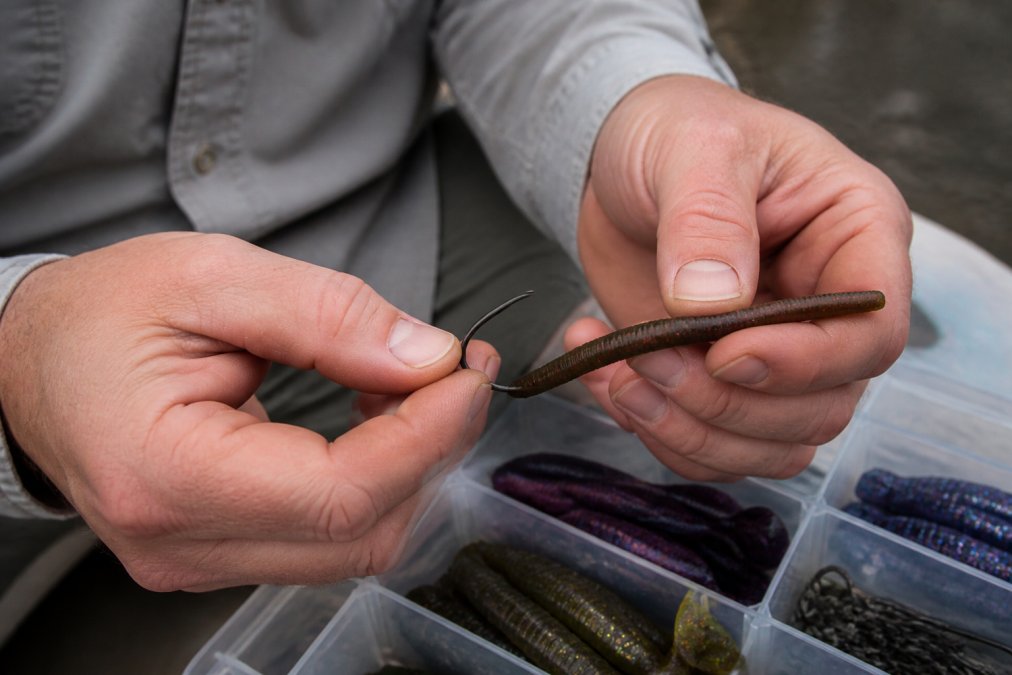
The most common rigging mistake is leaving the hook point exposed "just a little" to improve hooksets. That little bit of exposure catches weeds on every cast, defeating the purpose of the weedless presentation entirely.
Preventing Weeds on Fishing Line and Terminal Tackle
Even with a perfectly rigged soft plastic, weeds can still cling to your line and weight, creating drag and alerting fish. Preventing weeds on fishing line starts with choosing the right line diameter and material. Braided line floats and sheds vegetation better than monofilament, but it requires a fluorocarbon leader for abrasion resistance.
The terminal tackle matters just as much. Bullet weights with a blunt nose push through grass, while cone-shaped weights tend to deflect and catch. For trolling and bait fishing, a device that actively grabs weeds before they reach your lure saves hours of frustration.
When you are fishing heavy mats, consider a pegged weight to keep the rig compact. An unpegged weight slides on the hookset, which can reduce penetration in thick vegetation.
Advanced Knot Strength for Heavy Cover
Most anglers overlook the knot as the weakest link in a weedless setup. In thick vegetation, a standard clinch knot can slip or break under the strain of pulling a fish through grass mats. The knot must maintain 100% line strength while resisting abrasion from stems and branches.
For braided mainline to fluorocarbon leader connections, the FG knot is the gold standard. It passes through rod guides smoothly, retains nearly full line strength, and stays slim enough to avoid catching weeds. Practice tying it until you can complete it in under two minutes; the learning curve is worth the break-off prevention.
For tying hooks directly to fluorocarbon, the San Diego Jam knot outperforms the clinch knot in heavy cover. It grips the hook eye securely and maintains higher breaking strength under sudden loads. Wet the knot before cinching to prevent heat damage that weakens fluorocarbon.
A common pattern among experienced anglers is to re-tie after every few fish or after dragging through a thick mat. Microscopic abrasions weaken the line and knot, and the cost of re-tying is far lower than losing a trophy bass to a snapped leader.
When fishing around submerged timber or rocky bottoms, add a 12- to 18-inch fluorocarbon leader of 20- to 25-pound test. This abrasion-resistant section absorbs the punishment from structure, while your braided mainline provides the sensitivity and strength to drive the hook home.
Matching Rod and Reel to Your Weedless Setup
Matching rod and reel to your weedless setup is the overlooked half of the equation. A heavy-power rod with a fast tip gives you the backbone to drive a wide-gap hook through grass, while a medium-heavy rod suits open-water finesse fishing. The reel should hold enough braided line to handle a long cast into the wind.
For power fishing with a Texas rig, a 7-foot, 3-inch heavy-action rod paired with a high-speed reel (7:1 ratio) lets you rip lures free from grass and maintain contact on the hookset (fisheries.org). For a wacky rig, a medium-light spinning rod with a slower reel keeps the fall rate natural and prevents tearing the plastic.
The drag setting is critical in heavy cover. Set the drag tight enough to pull fish out of the grass, but loose enough to protect light fluorocarbon leaders on the initial run.
Eco-Friendly Options and Biodegradable Plastics
The environmental impact of lost soft plastics is a growing concern among anglers. Many traditional PVC-based plastics take decades to break down, and lost lures accumulate on lake bottoms and in vegetation (the NIH). Eco-friendly options and biodegradable plastics are now available that break down faster while maintaining the same action and durability.
These newer plastics are made from plant-based compounds that degrade under UV light and microbial action (acs.org). While they may not last as long in the tackle box, they significantly reduce the long-term footprint of bass fishing. Pairing these with lead-free weights and stainless steel hooks further reduces environmental impact.
When selecting eco-friendly gear, check the packaging for clear disposal instructions. Some biodegradable plastics require specific conditions to break down, so understanding the product's lifecycle matters.
Weedless Setups for Non-Bass Species
While bass dominate the weedless conversation, the same principles apply to other hard-fighting species that hold in vegetation. Pike, musky, and redfish all require weedless presentations to reach them where they live.
Pike and Musky: These toothy predators ambush prey in weed beds and lily pads. A weedless bucktail or soft plastic swimbait rigged on a heavy wire hook (2/0 to 5/0) with a wire leader is essential. The wire leader prevents bite-offs, while a weighted belly or bullet weight helps the bait sink through matted vegetation. Use a stout rod with 50- to 80-pound braided line to muscle these fish out of thick cover before they wrap you around a stump.
Redfish: In shallow coastal flats, redfish root through grass beds for crabs and shrimp. A weedless paddle-tail swimbait on a 3/0 or 4/0 EWG hook with a light bullet weight (1/8 to 1/4 ounce) works well. The key difference from bass fishing is the retrieve: a slow, steady crawl along the bottom mimics a fleeing crab. Use 20- to 30-pound braid with a 20-pound fluorocarbon leader to handle the abrasive grass without spooking wary fish.
Snakeheads and Bowfin: These aggressive species thrive in dense vegetation where bass setups often fail. A weedless frog or soft plastic toad rigged on a heavy hook with a double-hook weed guard punches through the thickest mats. The hookset must be delayed slightly until you feel the weight of the fish, as these species often inhale the bait before turning.
For all non-bass species, the rod and reel pairing follows the same logic as bass: match the power to the cover density, not just the fish size. A heavy-power rod with a fast tip gives you the leverage to pull any fish out of vegetation before it reaches deep structure.
Expanding your weedless arsenal beyond bass opens up new fisheries and challenges. The same rigging principles apply, but the hook size, line strength, and retrieve speed must adapt to the species and the cover they call home.
Final Verdict on the Best Weedless Fishing Setup
The best weedless fishing setup for 2026 balances snag resistance, hookup ratio, and cover penetration. For most bass anglers, a Texas rig with an offset EWG hook, a pegged bullet weight, and a natural-colored soft plastic remains the most versatile and effective option across grass, pads, and timber. For finesse situations in shallow water, a weedless wacky rig is the better call.
Ultimately, the right setup depends on the cover you fish and the species you target. For trolling and bait fishing, keeping your presentation clean is just as important as the hook itself. A weed guard or weed-deflecting accessory can make the difference between a productive day and a frustrating one.
Building a weedless arsenal takes practice, but the payoff is more time with your bait in the strike zone and fewer lures lost to the weeds. The key is to match your hook, weight, and line to the density of the cover and to rig your plastics with care every single time.
Frequently Asked Questions
What is the best rig for fishing in heavy vegetation?
The Texas rig is the gold standard for heavy vegetation because the bullet weight and offset EWG hook allow the bait to punch through grass mats and thick cover without snagging. For floating mats, a pegged weight helps the bait slide over the top. The key is matching a wide-gap hook to your soft plastic so the hook point tucks securely into the bait, ensuring a snag-free presentation with a high hookup ratio when a bass strikes.
How do you keep weeds off your fishing line while trolling?
Preventing weeds on fishing line while trolling starts with minimizing line diameter and using a fluorocarbon leader, which sheds vegetation better than braided line. Devices like the Fishing Weed Blocker attach to your line and grab weeds before they slide down to your bait. This protects your presentation and keeps your lure swimming naturally. Slowing your troll speed and checking your line periodically also reduces the amount of debris that accumulates.
What are the most effective weedless lures for bass?
The most effective weedless lures for bass include Texas-rigged soft plastics like worms, creature baits, and craws, which excel in heavy cover. Swimming jigs with a weed guard and weedless spoons also work well over grass beds. For topwater action, a weedless frog imitates a frog skittering across lily pads. Each lure uses a design that protects the hook point, allowing you to fish where bass hide without getting snagged.
Texas rig vs. Wacky rig: Which is better for weeds?
The Texas rig is better for weeds because the bullet weight and offset hook create a snag-free profile that penetrates heavy cover. The wacky rig, while effective in sparse vegetation and clear water, has an exposed hook in the middle of the bait that grabs grass and weeds easily. Use a wacky rig for finesse fishing in open water or light weeds, and switch to a Texas rig when you need cover penetration and snag resistance.
Does the Fishing Weed Blocker work with any lure or bait?
The Fishing Weed Blocker is designed for trolling and bait fishing, attaching to your line to grab weeds before they cover your lure or bait. It works with most setups where you are moving your bait through the water. It is not designed for casting presentations like a Texas rig. For fly fishing, the device is too heavy and would ruin the presentation, so it is best reserved for trolling and still fishing with live bait.
Weeds should not dictate where you fish or how long you stay out. Fishing Weed Blocker gives you a practical, patented solution that grabs weeds before they cover your bait, whether you are trolling or bait fishing. Engineered to cast like a rocket with minimum drag, it stacks neatly in your tackle box and is built to last. Get started with Fishing Weed Blocker and keep your presentation working longer.