

Table of Contents
- When to Use a Frog Lure for Bass
- Best Rod and Reel Setup for Frog Fishing
- How to Tie a Topwater Frog
- How to Work a Frog Lure Through Lily Pads
- Casting and Covering Water in Pad Fields
- Troubleshooting Missed Strikes and Hookset Issues
- Weather and Seasonal Conditions for Frog Fishing
- Protecting Your Presentation with a Weed Blocker
- Frequently Asked Questions
Last Updated: October 16, 2026
When to Use a Frog Lure for Bass
Learning how to fish topwater frogs in lily pads starts with understanding that a topwater frog is a hollow-body lure designed to skip across vegetation without snagging.
Use frog lures over lily pads, moss beds, or dense vegetation in warm water, where cover protects bass from predators.
Overcast days trigger more strikes than bright sun, and warm weather pushes bass shallower into vegetation.
Skip topwater frogs when the water is cold. Bass stay deep and move slowly, so a frog won't trigger the aggressive strikes you need.
Best Conditions for Frog Fishing
- Shallow water with heavy vegetation
- Warm weather (late spring through early fall)
- Early morning or late evening
Best Rod and Reel Setup for Frog Fishing
Landing bass in heavy vegetation requires a combo with the power to pull fish out of thick cover without breaking your line.
Rod and Reel Specifications
Choose a medium-heavy or heavy power rod, 6.5 to 7.5 feet long, for casting distance and a hard hookset in dense pads.
A baitcasting reel gives better control and accuracy than spinning reels.
Pair it with a reel holding at least 150 yards of line for long casts into open pockets within pad fields.
Line and Leader Choices
Use braided line, not monofilament. Braid has zero stretch, so your hookset transfers directly to the fish, and it cuts through weeds better.
Go with 50- to 65-pound-test braid. It handles the heavy rod and pulls bass from dense cover; thinner line breaks on hard hooksets or when a fish runs into vegetation.
Skip the leader. Bass in shallow, weedy water focus on the lure and aren't line-shy.
How to Tie a Topwater Frog
Use a Palomar knot or an improved clinch knot, both are strong and reliable.
Palomar Knot Steps:
- Thread the line through the frog's eye
- Tie a loose overhand knot (don't tighten it yet)
- Pass the loop over the frog's body
- Pull tight and trim the tag end
This keeps the frog aligned with your line and prevents twisting during the retrieve.
Test your knot by pulling hard before you cast, and make sure the frog hangs straight rather than angling sideways.
How to Work a Frog Lure Through Lily Pads
Most anglers lose frog fish in lily pads because they don't know how to fish topwater frogs in lily pads properly, they work the frog the same way in every field.
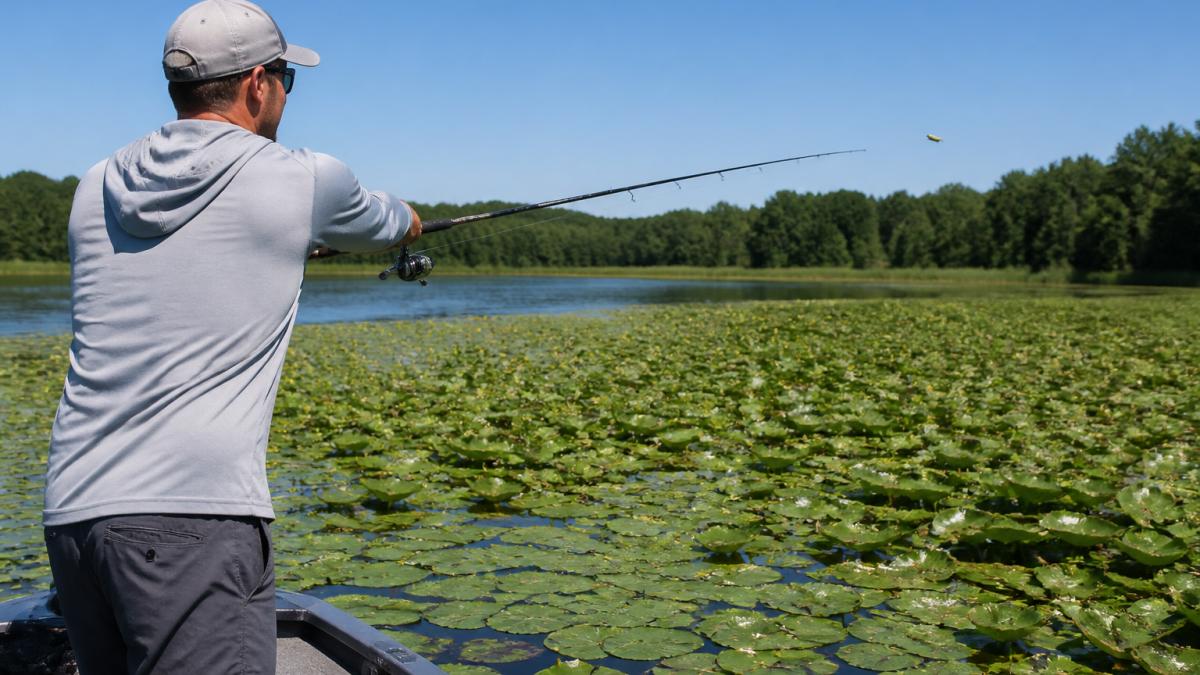
Step 1: Read the Pad Field Before You Cast
Before the first cast, spend 30 to 60 seconds scanning the field and pick three targets:
- Pad edges where the field meets open water or a channel. Bass sit on the outside edge facing in, waiting for prey to cross.
- Open pockets and holes inside the field. These are ambush points; a frog landing in a pocket often gets crushed on the first twitch.
- Lanes and seams where two pad mats meet or where a thin strip of open water cuts through. Bass use these as travel corridors.
Also note shade: a shaded pocket under a tree, dock, or thick clump of pads holds fish on bright days. Fish those spots first.
Step 2: Position the Cast
Accuracy beats distance. Land the frog 1 to 2 feet past your target and bring it into the strike zone rather than landing on top of the fish.
Keep the rod tip low and pointed at the water (roughly 8 o'clock) during the retrieve for straight tracking and a direct hookset.
Step 3: Work the Frog in a Pad-Specific Cadence
The basic cadence is twitch, pause, twitch, pause, but the pause length and twitch size should change with the pad layout:
- Sparse pads with open water between leaves: Use short, quick twitches (about 6 inches of rod-tip movement) with 1- to 2-second pauses. The frog should walk side to side. Speed up slightly; fish in sparse cover are more willing to chase.
- Dense mats with few holes: Slow down. Use tiny twitches and long pauses of 3 to 5 seconds. Let the frog sit on top of the mat. Bass in thick cover are ambushing, not chasing, and the pause is when most strikes happen.
- Pad edges: Walk the frog along the edge with a steady twitch-pause rhythm, then let it sit for 2 to 3 seconds at each point or clump. Repeat the same cadence through the whole edge before moving on.
A common mistake is working the frog too fast. Bass in heavy cover ambush rather than chase, so a slow, deliberate retrieve with pauses triggers more strikes.
Step 4: Adjust to Fish Activity
If you get blowups but no hookups, slow down and lengthen the pause. If the water is flat with no activity, speed up to trigger a reaction. On short strikes, try a smaller frog or trim the legs so the bait sits lower and the hooks are more exposed.
Step 5: Cover Water Systematically
Work a pad field in a grid or parallel lanes rather than casting randomly: outside edge first, then pockets, then lanes. If you get a fish from one target type, repeat that type across the field, that turns one bite into a pattern instead of a lucky cast.
Casting and Covering Water in Pad Fields
Casting accuracy matters more than distance. You need to hit specific spots, open pockets, pad edges, and transitions between sparse and dense vegetation.
Reading Pad Fields for Fish Location
Look for depth changes. Where pads thin out, the water is usually deeper.
Open water surrounded by pads is a bass magnet; a frog landing in an open pocket often gets crushed immediately.
Look for shade. Overhanging trees, docks, or dense pads create cooler zones bass move to in bright sunlight.
Targeting Open Pockets and Lily-Pad Edges
Cast to the edges of open pockets, not the middle. Bass position at the pocket edge where they can see prey entering.
Work the pad edges methodically. Cast parallel to the edge, not perpendicular, this keeps your frog in the strike zone longer and gets more bites.
Skip casts under overhanging cover when possible.
Troubleshooting Missed Strikes and Hookset Issues
A blowup that does not result in a hooked fish is the most common frustration in frog fishing, and the cause is usually timing, hook exposure, tackle, or fish behavior. Work through them in this order.
1. Timing the Hookset
The old advice to "wait until you feel the fish" is wrong for hollow-body frogs. Bass crush the frog and hold it, so the hooks must be driven through the bait and into the fish. The sequence is:
- See or hear the blowup.
- Wait a half-second to a full second (a quick "one Mississippi") so the fish has the frog in its mouth.
- Set the hook hard with a sweeping upward rod swing, not a wrist snap.
Set too early and the frog pulls out of the fish's mouth; wait too long and the fish feels the hook and spits it. The half-second pause is the sweet spot most experienced frog anglers settle on.
2. Diagnosing Short Strikes
A short strike is a blowup where the fish hits the back of the frog or swipes at it without taking it fully. Signs include a splash with no weight, the frog popping back up immediately, or a fish rolling on the surface. Fixes:
- Trim the legs. Shorten the frog's legs by a half-inch to an inch so the bait sits lower and the hooks are closer to the fish's mouth.
- Downsize the frog. A smaller frog profile gets eaten more completely on pressured fish.
- Slow the cadence. Short strikes often happen when the frog is moving too fast; lengthen the pause so the fish can commit.
3. Hook Fouling and Exposure
If the frog is landing on its side, spinning, or the hooks are buried in the plastic, the hookset will fail. Check these before every cast:
- Make sure the hooks sit just proud of the frog's body, not buried flush.
- Bend the hook points slightly outward (a common adjustment) so they clear the plastic on the set.
- Check that the frog is rigged straight on the line; a twisted frog spins and fouls.
4. Tackle-Related Failures
If fish are hooked but pull off in the pads, the problem is usually tackle, not the frog:
- Line too light: Step up to 50- to 65-pound-test braid so the hookset transfers and you can pull fish out of cover.
- Rod too soft: A medium-heavy or heavy rod with a fast tip drives hooks and turns fish. A medium rod will not generate enough power in thick pads.
- Drag too tight or too loose: Set the drag so a big fish can take a short run without breaking off, but tight enough that you can turn it before it wraps in vegetation.
5. When the Fish Are Just Not Committing
Some days bass swipe at frogs without eating. In that case, change the presentation rather than the hookset: switch to a popping frog for a different sound and action, slow the retrieve to a crawl, or downsize. If the fish are pressured, a smaller, quieter frog often gets committed strikes where a big noisy one only draws swipes.
Weather and Seasonal Conditions for Frog Fishing
Warm water activates bass and pushes them into shallow vegetation.
Fall can be excellent too. As water cools, bass move shallow to feed before winter.
Overcast days outproduce sunny days. On bright days, bass retreat deeper into dense cover.
Avoid frog fishing in winter. Cold water slows bass metabolism. They won't chase a topwater lure.
Protecting Your Presentation with a Weed Blocker
Heavy vegetation is the frog's strength and its weakness.
A Fishing Weed Blocker solves this problem. This patented device grabs weeds before they can cover your bait or lure.

The Weed Blocker mounts easily on your line and keeps vegetation from fouling your hook. It's built to last and stacks neatly in your tackle box.
For anglers serious about frog fishing in heavy vegetation, the Weed Blocker is an essential tool. Get a Fishing Weed Blocker for $15.97 and protect your presentation on every cast.
Frequently Asked Questions
When should you use a frog lure for bass fishing?
Use a frog lure when bass are feeding on the surface in shallow water, typically during early morning, late evening, or warm weather when fish are most aggressive. Frog lures work best over dense vegetation, lily pads, moss, and other cover where bass hunt. They're particularly effective in late spring through early fall when water temperatures climb and bass move into shallow areas to feed.
What is the best rod and reel setup for frog fishing in heavy vegetation?
Choose a medium-heavy or heavy power rod (6.5 to 7.5 feet) paired with a low-profile baitcasting reel spooled with 50-65 lb braided line. Braided line cuts through weeds and provides the sensitivity to detect strikes and the strength to set the hook in dense cover. A reel with a fast retrieve ratio (7:1 or higher) helps you cover water quickly and keep tension on the line when working through lily pads.
How do you prevent weeds from covering your frog lure in lily pads?
Use a Fishing Weed Blocker, a patented device designed to grab weeds before they reach your lure. The device glides smoothly through the water and captures debris, keeping your frog visible and your presentation clean. At $15.97, it's an affordable way to reduce frustration and increase your catch rate when fishing in heavy vegetation. Simply attach it to your line above your lure.
How long should you wait to set the hook after a bass hits a frog?
Set the hook immediately when you see or feel a strike. Bass often blow up on topwater frogs, creating a visible disturbance. Don't hesitate or wait for the fish to fully take the lure. A quick, firm hookset with your rod drives the hook through the frog's body and into the fish's mouth, especially important when fishing over dense cover where you need to quickly turn the fish away from vegetation.
Frog fishing in lily pads is one of the most exciting ways to catch bass. It demands precision, patience, and the right equipment. A solid rod and reel, proper technique, and attention to water conditions will put more fish in your boat. But success also depends on keeping your presentation clean in heavy cover. The Fishing Weed Blocker removes that barrier, letting you fish with confidence and land more bass from the densest vegetation on your water.