
Table of Contents
- What Weedless Fishing Lures Are and How They Work
- Choosing a Lure for Your Target Fish Species
- Best Weedless Lures for Different Cover Types
- How to Rig a Weedless Lure for Maximum Performance
- Weedless Lures for Thick Grass and Submerged Vegetation
- How to Keep Weeds Off Fishing Lures and Maintain Presentation
- Matching Rod, Line, and Hook Setup to Cover Density
- Frequently Asked Questions
Last Updated: October 10, 2026
What Weedless Fishing Lures Are and How They Work
Weedless fishing lures are specially designed baits that prevent weeds, grass, and debris from fouling your hook and obscuring your presentation. They work by using a weed guard, a wire or fiber barrier positioned above the hook point, that deflects vegetation as the lure moves through the water.
When a fish strikes, the weed guard flexes backward, exposing the hook point for a solid hookup.
Most weedless lures use soft plastic bodies paired with weighted hooks. The weight helps the lure cast farther and sink to the right depth, while the soft plastic mimics natural baitfish or creatures.
Here's what makes them effective:
- Weeds don't tangle around the hook shank
- Hook point stays exposed and ready
- You can fish heavy cover without constant snagging
- Retrieve speed stays consistent, no dragging vegetation slowing you down
Choosing a Lure for Your Target Fish Species
Different fish species respond to different lure profiles: bass prefer crawfish or small baitfish, pike want larger profiles with flash, and walleye prefer subtler presentations.
For bass, soft plastic creatures (4-6 inch crawfish or creature baits) work best, paired with a Texas rig (weighted hook threaded through the plastic body) for maximum weedless performance.
For pike and musky, larger soft plastics (7-10 inches) or weedless spoons work better, creating vibration that pike detect from a distance.
For walleye, use smaller, natural-looking soft plastics (2-4 inches) with lighter weights for a more natural fall.
Match the hatch: use lures that resemble the actual baitfish or prey in your local fishery.
Best Weedless Lures for Different Cover Types
Selecting the right setup requires balancing snag resistance against hook-up rate: extremely snag-resistant lures miss more strikes, while hook-up-optimized lures foul weeds more often.
For thick surface grass and mats, use a punch rig with a heavy tungsten weight (1/2 to 1 ounce) and short soft plastic (2-3 inches). Cast to the thickest grass, let the weight drive the lure down, then work it with sharp upward rod movements to keep it moving through the grass.
For submerged weed beds, a standard Texas rig with a 1/4 to 3/8 ounce weight excels. Cast over the weeds, let the lure drop, then retrieve with a steady, medium-speed pull. Pause occasionally to let the lure fall into pockets where fish hold.
For scattered cover (downed trees, brush piles, isolated grass patches), a weedless spoon works best. Spoons have a thin profile that slides through obstacles with minimal snagging and create flash and vibration that attracts fish from a distance.
For light vegetation and sparse cover, a simple Texas rig with a 1/8 or 1/4 ounce weight lets the lure move naturally and fall slower.
Use darker colors (black, dark green, brown) in thick grass, brighter colors (chartreuse, white, orange) in clearer water, and high-contrast colors in stained water.
Slow down through thick cover. Fish in heavy vegetation are ambush predators; they strike when an easy meal drifts into their strike zone, not when something blasts past at high speed.
How to Rig a Weedless Lure for Maximum Performance
Rigging correctly is the difference between a lure that works and one that fails. Improper hook placement directly affects your snag rate and hook-up rate.
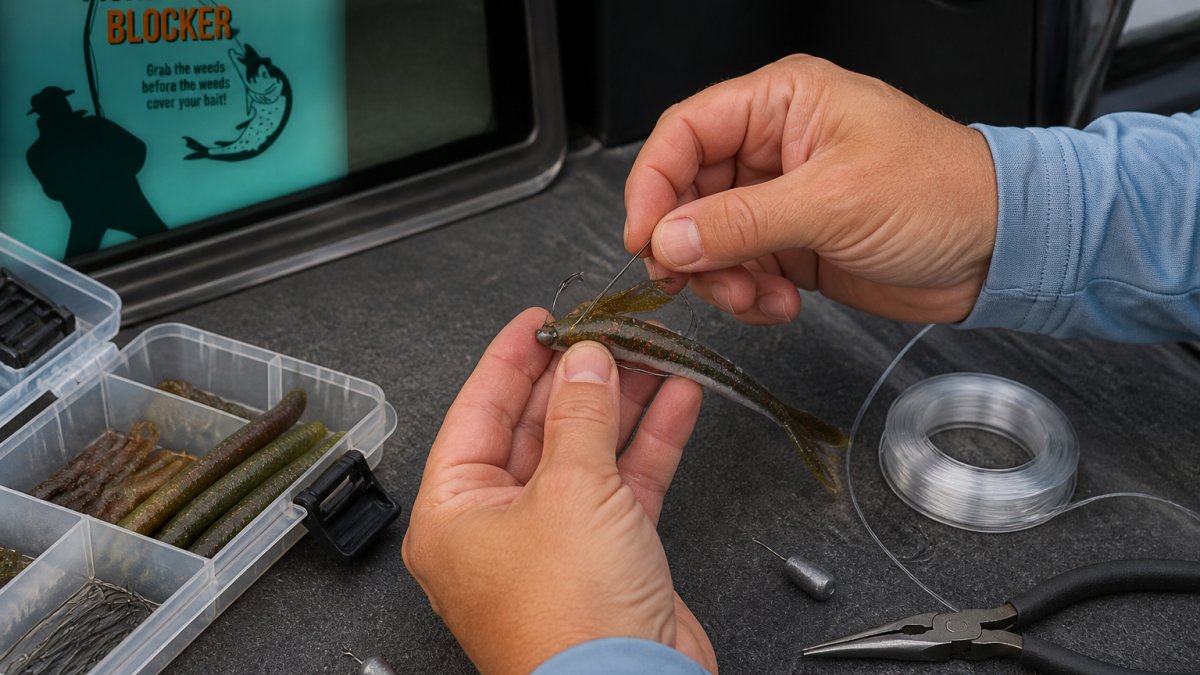
Step 1: Choose your hook and weight based on cover density. Heavy cover needs a 3/0 to 5/0 hook with 3/8 to 1/2 ounce weight; moderate cover needs 2/0 to 4/0 with 1/4 ounce; light cover needs 1/0 to 2/0 with 1/8 ounce.
Step 2: Thread the weight onto your line. Slide a bullet or tungsten weight onto your main line, then tie on your hook using an improved clinch knot or Palomar knot.
Step 3: Insert the hook into the plastic. Push the hook point into the soft plastic's head, rotate it 180 degrees, and push the point back out through the side.
Step 4: Align the hook point for straight tracking. The hook point should exit the plastic body in a straight line with the entry point. Rotate the plastic body around the hook shank until the exit point aligns.
Step 5: Check alignment with a test cast. Cast the rig a few times in shallow water. The plastic should move straight without spinning. If it twists, reposition the hook exit point, try a different plastic body, or ensure the weight is threaded straight.
Step 6: Verify weed guard function.
The weed guard should sit just above the hook point, deflecting vegetation without blocking strikes. If the guard is too stiff, it will prevent fish from reaching the hook. If it's too loose, it won't deflect weeds.
Rigging troubleshooting:
| Problem | Cause | Fix |
|---|---|---|
| Plastic twists during cast | Hook exit point misaligned | Reposition hook or try different plastic |
| Constant snagging in light cover | Hook point too exposed | Bury hook point deeper into plastic |
| Missing strikes in heavy cover | Hook point too buried | Skin-hook instead of fully burying |
| Weed guard bends backward too easily | Guard too loose or worn | Replace lure or adjust guard tension |
| Lure sinks too slowly | Weight too light for cover density | Increase weight by 1/8 to 1/4 ounce |
| Lure sinks too fast, loses natural action | Weight too heavy | Decrease weight or switch to lighter material |
Rigging variations for specific conditions:
- Texas rig (standard): Weight threaded on line, hook tied below. Best for submerged weeds and moderate cover.
- Punch rig: Heavy weight (1/2-1 ounce) with short plastic (2-3 inches). Best for thick surface grass.
- Weightless rig: No weight, plastic only. Best for shallow, sparse cover or when you need a slow fall.
- Wacky rig: Hook threaded through the middle of the plastic body. Best for finesse presentations in light cover.
Maintenance between trips:
- Rinse soft plastics with fresh water to remove algae and sediment; dried algae reduces action.
- Inspect weed guards for damage, bent wire, or corrosion; replace if compromised.
- Replace worn plastics that have lost their shape, color, or texture; a degraded plastic won't trigger strikes.
- Check hook sharpness with your thumbnail; a dull hook won't penetrate during a strike. Sharpen or replace as needed.
A well-rigged, well-maintained lure performs consistently. A fouled, misaligned, or damaged rig loses effectiveness quickly and costs you fish.
Weedless Lures for Thick Grass and Submerged Vegetation
Thick grass and submerged weeds demand aggressive, heavy setups. Light rigs won't penetrate the vegetation layer.
Punch rigs dominate thick grass because they're designed to punch through. Use a 1/2 to 1 ounce tungsten weight with a short, compact soft plastic (2-3 inches). Cast toward the thickest grass, let the weight drive the lure down, then work it with sharp upward rod movements. This "punching" action keeps the lure moving through the grass rather than sinking into it and getting stuck.
For submerged weeds, you need a lure that falls slowly and stays in the weed layer longer. A standard Texas rig with a 1/4 ounce weight works better here. Cast over the weeds and let the lure drop. Retrieve with a steady, medium-speed pull. The weed guard keeps vegetation off the hook, and the soft plastic's natural action triggers strikes from fish holding in the weeds.
Color matters in dense cover. Use darker colors (black, dark green, brown) in thick grass where light penetration is low. Brighter colors (chartreuse, white, orange) work better in clearer water or lighter vegetation.
One common mistake: fishing too fast through thick cover. Slow down. Let the lure drop into pockets. Fish in heavy vegetation are ambush predators, they strike when an easy meal drifts into their strike zone, not when something blasts past at high speed.
How to Keep Weeds Off Fishing Lures and Maintain Presentation
Even with a weed guard, vegetation will occasionally foul your lure. Knowing how to clear it quickly keeps you fishing instead of fiddling.
Prevention starts with the right weed guard design. A properly positioned guard deflects most vegetation. But if weeds wrap around the lure body or hook shank, you need to clear them immediately. The longer weeds stay on, the more they accumulate.
To clear weeds mid-cast: After casting, reel slowly while shaking your rod tip side to side. This action helps the weed guard slide vegetation off. If weeds persist, stop and manually remove them with your fingers or a small tool.
Maintain your presentation by checking your lure every 5-10 casts. Look for:
- Weeds wrapped around the hook bend
- Grass tangled in the weed guard
- Debris stuck to the plastic body
A quick visual check takes 3 seconds. Removing fouling immediately prevents it from affecting your next cast.
Use the Fishing Weed Blocker device to grab weeds before they reach your bait. This patented solution captures vegetation in the water column, keeping your lure and hook completely clear. It's engineered to cast smoothly and flow through water with minimal drag, so your presentation stays natural while the device does the work of clearing debris.

Lure maintenance between trips:
- Rinse soft plastics with fresh water to remove algae and sediment
- Inspect weed guards for damage or bent wire
- Replace worn plastics that have lost their shape or color
- Check hook sharpness, a dull hook won't penetrate during a strike
A well-maintained lure performs consistently. A fouled or damaged lure loses effectiveness quickly.
Matching Rod, Line, and Hook Setup to Cover Density
Your rod, line, and hook must work together to handle the cover you're fishing. Mismatched gear leads to lost fish and broken lures.
For heavy cover, use a medium-heavy or heavy power rod (6.5-7 feet). Heavy cover demands the ability to set the hook hard and horse fish out quickly. A lighter rod will bend too much, reducing hook-set power.
Line choice is critical. Braided line (20-30 pound test) handles heavy cover better than monofilament. Braid has minimal stretch, so you feel the bottom and weeds clearly. It also cuts through vegetation more effectively. Monofilament stretches, which absorbs some of your hook-set power, not ideal in thick cover.
Hook size and sharpness determine hook-up rates. In heavy cover, you need a sharp hook that penetrates quickly. Dull hooks bounce off fish's jaws. Use a 3/0 to 5/0 hook for most bass presentations in vegetation. Larger hooks (6/0 and up) work for pike and musky.
For light vegetation, you can downsize. A medium power rod (6-6.5 feet), 15-20 pound monofilament, and 2/0 to 3/0 hook all work fine. The reduced power is acceptable because you're not fighting heavy cover.
The key principle: match your gear to your cover. Heavy cover requires heavy gear. Light cover allows lighter setups that feel more natural and offer better sensitivity.
Choosing the right weedless fishing lure means understanding your target species, matching cover type to lure design, and rigging correctly. But even the best lure fails if weeds foul it constantly. That's where the Fishing Weed Blocker makes a real difference. Our patented device grabs weeds before they cover your bait, keeping your hook free and your presentation clean.
Frequently Asked Questions
What makes weedless fishing lures different from regular lures?
Weedless fishing lures feature a weed guard, typically made of wire or bristles, that protects the hook point from fouling on grass and debris. The design allows the lure to slide over vegetation without snagging while still exposing the hook enough to hook fish when they strike. Regular lures lack this protection, causing weeds to cover the hook and prevent hook-ups in heavy cover.
How do I choose between soft plastic and spoon weedless lures?
Soft plastic lures work best in thick grass and heavy cover because they mimic natural baitfish and creature baits. Weedless spoons excel in open water with scattered weeds and work well for trolling. Soft plastics typically offer better hook-up rates in dense vegetation, while spoons cast farther and work faster retrieves. Match your choice to your fishing environment and target species behavior.
Will a weedless lure slow down my retrieve or affect how natural my presentation looks?
Quality weedless lures are engineered to cast and retrieve naturally with minimal drag. The weed guard design allows the lure to flow through water smoothly while protecting your hook. Some anglers worry about reduced action, but modern weedless lures maintain the darting, wobbling, or swimming motion that attracts fish. The key is matching the right lure weight and style to your target species and water conditions.
Can I use weedless lures in light vegetation, or are they only for thick grass?
Weedless lures work in any vegetation density, from light weeds to thick grass. In shallow ponds with minimal vegetation, they still provide value by reducing snags and keeping your presentation clean. However, if you're fishing open water with no weeds, standard lures may offer slightly better action. For anglers who fish multiple environments, weedless lures are versatile enough to handle both light and heavy cover effectively.