
Table of Contents
- Why Lure Selection Matters on Shallow Grass Flats
- Weedless Lures for Grass Flats: Your Best Defense
- Trolling Speed for Shallow Water: Finding Your Sweet Spot
- How to Keep Weeds Off Fishing Lures While Trolling
- Best Lures for Redfish on Grass Flats
- Running Depth and Weedless Performance: What Actually Works
- Frequently Asked Questions
Last Updated: October 12, 2026
Why Lure Selection Matters on Shallow Grass Flats
When trolling shallow grass flats, your lure choice makes or breaks your day.
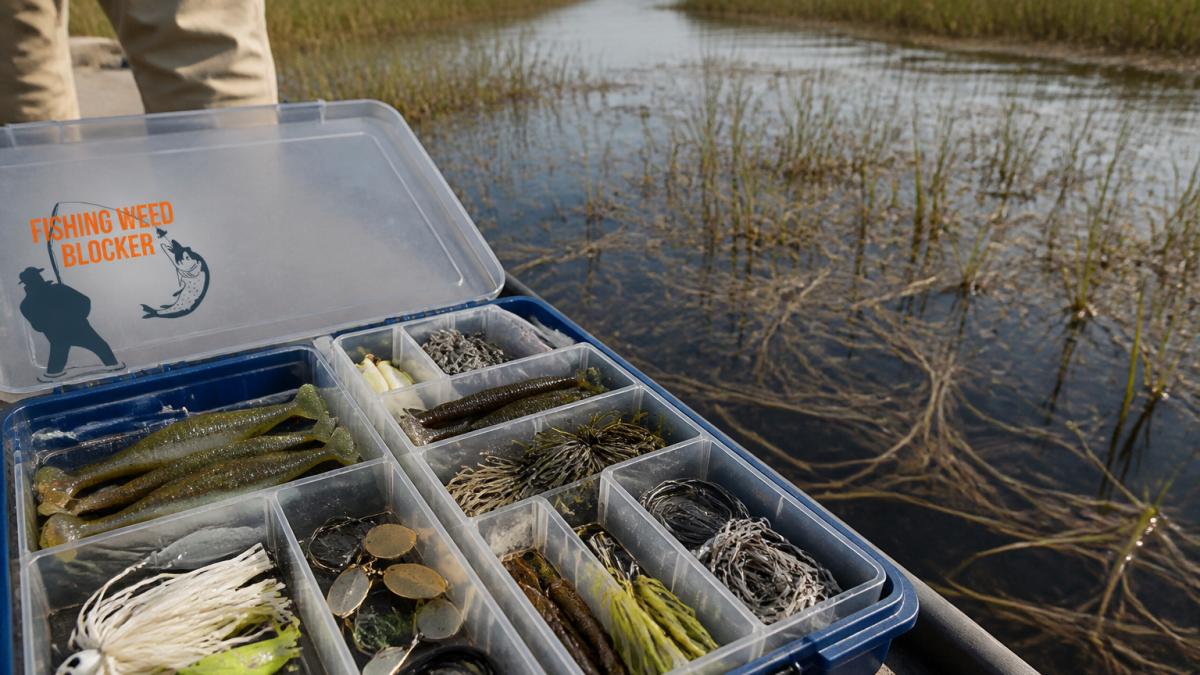
Shallow grass flats present a specific challenge: dense vegetation that fouls standard lures within seconds. The solution is matching your lure to the environment.
The difference is lure design and weed protection: a weedless presentation keeps your hook clear and your bait attractive, separating consistent catches from endless re-casts.
The best trolling lures for shallow grass flats run shallow, resist fouling, and maintain their action through thick vegetation. Understanding these traits helps you stock your tackle box with confidence.
Weedless Lures for Grass Flats: Your Best Defense
The foundation of grass-flat trolling is choosing lures engineered to shed weeds. Weedless designs protect your hook point and keep your presentation clean.
What separates a trolling lure from a casting lure on grass flats is how it behaves when moving continuously behind a boat: a lure that sheds weeds on a single cast may still load up after 50 yards of steady retrieve. The four families below hold up to that abuse.
Soft Plastics and Swimbaits
Soft plastics dominate shallow grass-flat trolling because they're forgiving and effective. A Texas-rigged soft plastic with an offset worm hook and bullet weight slides through grass without catching, and its natural feel triggers more aggressive bites than hard baits.
Swimbaits offer a realistic baitfish profile that works when bass or redfish are actively feeding. A paddle-tail swimbait mimics prey movement and creates vibration fish detect even in murky water.
For trolling, rig swimbaits on a weighted swimbait hook (also called a belly-weighted hook) rather than an exposed jighead. The weight sits on the shank, the hook point tucks against the plastic, and the bait tracks straight instead of spinning.
Jigs and Weighted Presentations
Jigs are workhorses on grass flats because they maintain bottom contact and cut through vegetation efficiently. A football-shaped jighead slides over grass without hanging up; pair it with a craw trailer or small swimbait.
The key to jig success on grass flats is weight selection. A 3/8-ounce jig works for shallow water under 4 feet; move to 1/2-ounce for depths between 4-6 feet or when trolling faster. Too light and your jig rides above the grass; too heavy and it digs in and fouls.
Weighted presentations like a Texas rig with a bullet sinker also excel in grass: the sinker rides ahead of the plastic, letting the soft body flutter naturally as it sinks through vegetation, producing more strikes than rigid hard baits.
Spinnerbaits and Vibrating Baits
Spinnerbaits generate vibration and flash that cut through weeds and attract fish from a distance. An inline spinner with a single blade creates less drag than tandem-blade models, and the blade rotates freely, shedding grass as it spins.
Chatterbaits, a hybrid between a jig and spinnerbait, combine a vibrating blade with a plastic trailer. The blade oscillates side-to-side, triggering aggressive strikes; run one with a paddle-tail trailer for maximum action and weed shedding.
Both work best at moderate trolling speeds (1.5-2.5 mph) where blade action remains consistent: slower speeds reduce vibration, faster speeds cause the blade to rise and lose contact with grass cover.
Choosing Between Them: A Selection Framework
Most guides list lure types and stop there. The practical question is which one to tie on for the flat in front of you. Use these criteria:
| Lure type | Typical running depth | Grass shedding | Action at trolling speed | Best when |
|---|---|---|---|---|
| Texas-rigged soft plastic | 1-4 ft (weight dependent) | Excellent | Subtle flutter | Dense grass, pressured fish, cold water |
| Paddle-tail swimbait on weighted hook | 2-5 ft | Very good | Steady tail thump | Active fish, murky water, baitfish present |
| Football jig + trailer | 3-6 ft | Good | Bottom contact, craw action | Fish holding tight to bottom, shell or sand patches |
| Inline spinner | 2-4 ft | Very good | Single-blade flash and vibration | Stained water, fish spread out, need to cover water |
| Chatterbait | 2-4 ft | Good | Side-to-side vibration | Aggressive reaction bite, warmer water |
Matching Lure Size to Conditions
Size matters as much as type. On pressured flats, downsize: a 3-4 inch plastic or 1/4-ounce jig draws more strikes than a big swimbait. When fish chase bait, upsize: a 5-6 inch swimbait or 1/2-ounce spinnerbait covers water faster and triggers reaction bites. Cold water favors smaller and slower, warm water larger and faster, carry a range rather than one "confidence" lure.
Trolling Speed for Shallow Water: Finding Your Sweet Spot
Speed directly affects lure action, weed fouling, and fish response. Too slow and your presentation sinks into grass; too fast and it loses natural action while dragging weeds.
For shallow grass flats, target 1.5 to 2.5 miles per hour with most lures.
Adjust speed by lure type. Soft plastics and jigs tolerate slower speeds (1.0-1.5 mph) because their action comes from structure, not movement. Spinnerbaits and chatterbaits need 2.0-2.5 mph to generate blade vibration.
Water temperature also influences speed. Cold water (below 55 degrees) calls for slower presentations that give fish time to react; warm water (above 75 degrees) allows faster trolling that triggers reaction strikes.
Speed Is Only Half the Equation: Line Length Controls Depth
Most trolling guides tell you what speed to run and stop there. On a grass flat, speed and line-out distance work together to set running depth, and line length is the lever most anglers ignore.
The longer the line behind the boat, the deeper a lure runs at a given speed. A shallow crankbait rated 2-4 feet might run 2 feet at 40 feet of line-out and 4 feet at 80. On a 3-foot flat with grass topping out at 2 feet, that's the gap between fishing clean and plowing weeds.
A practical starting point for grass flats:
- Soft plastics and jigs: 40-60 feet of line-out. Short enough to keep the lure in the top 2-3 feet, long enough to avoid spooking fish with the boat.
- Spinnerbaits and chatterbaits: 50-70 feet. The blade needs a little more line to stabilize, but too much line drops the bait into grass.
- Shallow crankbaits: 30-50 feet. Keep them high in the water column; long line-outs drive them into vegetation.
Tackle Setup for Grass-Flat Trolling
Rod, reel, and line choices affect depth control and weed shedding.
- Rod: A 7- to 7-foot-6 medium-heavy casting rod gives you enough backbone to pull a fouled lure free without breaking off, and enough tip to read grass contact.
- Reel: A low-profile baitcaster with a gear ratio around 6.3:1 to 7.3:1 handles the speed range without wearing you out. A line counter reel is worth the investment if you troll the same flats repeatedly.
- Line: Braid in the 20-30 lb class is the standard choice. It has almost no stretch, so you feel grass contact immediately, and it cuts through vegetation better than monofilament when a lure does foul. Add a 12-18 inch fluorocarbon leader if water is clear and fish are leader-shy.
- Leader length: Keep it short on grass flats. A long leader sags and collects grass at the connection knot.
Reading Speed and Depth Together
The fastest way to dial in a flat is to make a pass at 1.5 mph with a known line-out distance, watch where the lure runs, then adjust one variable at a time. Ticking grass tops? Speed up slightly or shorten line-out. Running above the fish? Slow down or let out more line. Change one thing per pass so you know what worked.
A common pattern on pressured flats is that fish sit on the edge of grass, not in the middle of it. Trolling parallel to a grass edge at 1.5-2.0 mph with 50-60 feet of line-out keeps your lure in the strike zone longer than running straight across the flat, and dramatically reduces fouling.
How to Keep Weeds Off Fishing Lures While Trolling
Weed fouling is the biggest frustration when trolling shallow grass flats. Vegetation wraps your lure, covers the hook, and kills your presentation within seconds, prevention beats constant re-casting.
Start with weedless lure designs, Texas rigs, jigs, and inline spinners all shed weeds better than open-hook presentations. But design alone isn't always enough in thick vegetation.
A weed guard, a device that sits ahead of your lure and deflects vegetation, protects your presentation without slowing it down. The Fishing Weed Blocker is engineered specifically for this purpose: it grabs weeds before they reach your lure, keeping your hook free and your bait visible, and its patented design flows through water with minimum drag.

Install your weed guard 12-18 inches ahead of your lure on your main line, far enough to intercept vegetation without interfering with the lure. Test the spacing in your first few casts and adjust if you're catching weeds before the guard engages.
Retrieve technique matters too. Maintain steady speed and direction, since erratic movement can wrap grass around your line.
Best Lures for Redfish on Grass Flats
Redfish on shallow grass flats respond to different presentations than bass, relying heavily on sight and lateral-line detection, which makes vibration and flash critical triggers.
Larger swimbaits (5-8 inches) excel for redfish because they mimic mullet and other baitfish that redfish hunt.
Spinnerbaits with larger blades (1/2 to 3/4 ounce) create the vibration and flash redfish find irresistible. Run them at steady speeds without pausing.
Jigs work for redfish too, but use heavier models (1/2 to 3/4 ounce) to maintain bottom contact and create more vibration.
Color selection for redfish is less critical than for bass, but natural patterns (white, pearl, brown, orange) consistently outperform bright or unnatural colors, realistic presentation beats flashy attraction.
Running Depth and Weedless Performance: What Actually Works
Running depth, how shallow your lure travels, determines whether you'll contact grass or swim above it. Most grass flats range from 2 to 6 feet deep.
Soft plastics on jigheads give precise depth control.
The relationship between running depth and weedless performance is direct: the shallower you run, the more critical weed protection becomes.
Test your setup in shallow water before committing to a full day of trolling. Cast your lure and watch how deep it runs at your target speed.
When you're chasing fish on shallow grass flats, lure selection and weed management determine your success.
Frequently Asked Questions
What lures work best for trolling shallow grass flats?
Soft plastics, swimbaits, jigs, and spinnerbaits dominate shallow grass flats because they handle vegetation without fouling. Soft plastics like paddle tails excel at mimicking baitfish, while jigs with weedless designs cut through grass cleanly. Spinnerbaits create reaction strikes through vibration and flash. The key is choosing lures with weedless hooks or designs that shed grass naturally. Pairing these with a Fishing Weed Blocker ($15.97) adds an extra layer of protection, grabbing weeds before they cover your bait.
How fast should you troll over shallow grass flats?
Trolling speed for shallow water typically ranges from 1.5 to 3 miles per hour, depending on lure type and species. Soft plastics and swimbaits work well at 2 to 2.5 mph, allowing natural movement. Slower speeds (1.5 to 2 mph) work better in dense vegetation because they reduce snagging and give fish more time to strike. Experiment with speed adjustments based on water clarity and how your lure behaves through the grass.
How do you keep a trolling lure from picking up grass?
Use weedless lure designs with upturned hooks or wire guards that deflect vegetation. Soft plastics rigged Texas-style or on shaky-head jigs naturally shed grass. Spinnerbaits with inline designs also minimize fouling. Line length matters too: longer lines keep lures in shallower zones where grass is thickest, so adjust accordingly. Trolling at optimal speeds (2 to 2.5 mph) reduces drag on weeds. For maximum protection, install a Fishing Weed Blocker ahead of your lure to intercept debris before it reaches your presentation.
Are weedless lures effective for redfish on grass flats?
Yes, weedless lures are highly effective for redfish on grass flats because redfish hunt in shallow, weedy areas where traditional lures foul quickly. Soft plastics with paddle tails and swimbaits trigger reaction strikes while staying clear of vegetation. Jigs tipped with soft plastic trailers work well for searching grass and sand transitions. Spinnerbaits create vibration that redfish detect easily in murky shallow water. The combination of weedless design and natural baitfish imitation makes these lures ideal for redfish trolling.