
Table of Contents
- What a Weedless Trolling Lure Is and Why It Matters
- How Weedless Trolling Lures Work: Mechanics and Hydrodynamics
- Best Weedless Trolling Rigs for Heavy Cover and Scattered Grass
- How to Clear Weeds Quickly While Trolling
- Trolling Speed, Presentation Depth, and Strike Zone Control
- Common Weedless Rigging Mistakes to Avoid
- Maintenance and Gear Longevity for Weedless Trolling
- Frequently Asked Questions
Last Updated: September 21, 2026
What a Weedless Trolling Lure Is and Why It Matters
A weedless trolling lure uses a guard, shield, or shaped body to keep weeds off the hook while you drag it through cover, so you keep fishing where the fish live.
The Core Problem: Weeds Steal Your Presentation
A lure covered in grass stops looking like food. Fish ignore it, and the added drag throws off its action, a swimming plug that wobbles right in open water can tumble once sargassum wraps the line. Most anglers blame the spot; the real issue is the tackle setup.
How Weedless Lures Differ From Standard Lures
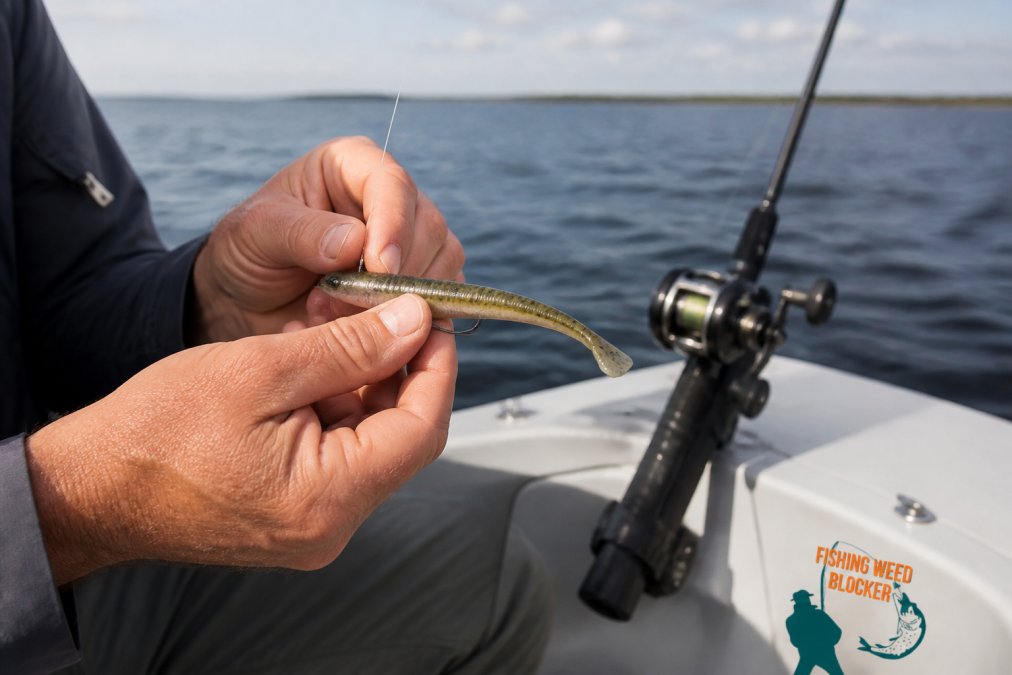
Standard lures leave the hook point fully exposed, fine in open water, a snag waiting to happen in cover. Weedless designs hide or shield the point:
- Spoons and jigs with a wire or bristle weed guard
- Soft plastics rigged with the hook buried in the body
- Lures with a hydrodynamic profile that deflects debris
How Weedless Trolling Lures Work: Mechanics and Hydrodynamics
A weedless lure deflects debris away from the hook point while keeping the hook ready to fire on a strike. Two forces do the work: the weed guard and the lure's shape in the water. Most guides stop at the guard, the real story is what happens to a strand of grass the moment it touches a moving lure.
The Physics of Weed Shedding
When you troll, your lure moves through water at 1 to 3 mph, creating a boundary layer, a thin film of water that clings to the surface and flows around it. A weed strand riding that layer either slides off the tail or catches on a protrusion and sticks. Three variables decide which:
- Angle of attack. A lure whose nose is narrower than its tail (a tapered minnow body, a bullet-weighted soft plastic) splits water and pushes debris outward. A blunt or cupped face, think a wide wobbling crankbait, stalls water in front of it, and grass collects there.
- Surface roughness. Smooth, glossy finishes shed vegetation. Matte, textured, or heavily ribbed bodies give weed strands a mechanical grip, which is why a plain painted spoon slides through milfoil while a heavily detailed swimbait snags on the same pass.
- Reynolds number regime. At trolling speeds, most lures sit in a transitional flow regime, not fully laminar, not fully turbulent. In that band, small changes in speed or lure size flip the flow from 'shedding' to 'sticking.' A lure that runs clean at 2.5 mph can load up at 1.8 mph because the boundary layer separates earlier and eddies form behind the body, trapping debris.
Why Shape Beats Guard Alone
A weed guard only protects the hook point, it does nothing for the line, swivel, or lure body. That's why a lure with a perfect guard but a bulky profile still fouls.
The lures that troll cleanest share a shape language:
- Narrow, tapered noses that split water rather than push it
- Smooth, continuous curves with no ledges for grass to catch
- Rear-weighted balance so the tail rides down and the nose up, angling the body away from floating debris
- A single hook point rather than trebles, which present three catch points instead of one
Where the Line Fouls First
Here's the part most guides skip: weeds usually grab the line before they reach the lure. A monofilament line trolled at 2 mph drags a thin wake of surface film, and floating vegetation rides that film straight down to the lure.
- Braid sinks and cuts through surface film but has a rough texture that grabs filamentous algae.
- Fluorocarbon sinks faster and is smoother, but it's stiffer and can coil.
- Monofilament floats and acts like a weed rake on the surface.
Species-Specific Weed Shedding
Different game fish sit in different cover, and the physics changes with them:
- Bass hold tight to milfoil and hydrilla edges. A Texas-rigged soft plastic with a pegged bullet weight and a narrow profile sheds best because it can be worked slowly along the edge without hanging.
- Pike ambush from weed flats and open pockets. A weedless spoon with a single siwash hook and a smooth, wobbling body sheds grass because the flared shape pushes water outward at the edges.
- Walleye suspend over deep weed edges and rock. A slow-trolled worm harness with a smooth bead chain and a narrow blade sheds less because the blade itself is a debris catcher, which is why many walleye trollers run a weed-blocking device ahead of the harness.
Best Weedless Trolling Rigs for Heavy Cover and Scattered Grass
The best weedless trolling rig depends on what you're fishing through. Heavy cover calls for a Texas rig with a bullet weight. Scattered grass favors lighter terminal tackle and a snap swivel.
Texas Rig and Offset Worm Hook Setup
The Texas rig is the workhorse for soft plastics in cover:
- Slide a bullet weight onto your line, point first.
- Tie on an offset worm hook.
- Thread the hook point into the nose of the soft plastic.
- Push the hook through and out the side.
- Pull the plastic back and bury the hook point in the body.
Bullet Weight, Snap Swivel, and Terminal Tackle Choices
Terminal tackle decides how your rig behaves in the water:
- Bullet weight: Heavier in wind and deep grass, lighter in shallow water.
- Snap swivel: Lets the lure spin without twisting your line.
- Hook gap: Wide enough to clear the plastic on a hookset.
How to Clear Weeds Quickly While Trolling
Clear weeds fast by snapping the rod tip once, then reeling two or three quick turns. This shakes loose most debris without pulling your lure out of the strike zone. If that doesn't work: drop the rod tip toward the water, give one sharp upward snap, reel fast for three turns, then feel for the lure's action again.
Debris Deflection and Line Drag Reduction
Debris builds up on the line first, sliding down toward the lure until it fouls the presentation. Reducing line drag slows that buildup. Thinner line cuts through water better but snags more grass; braid handles cover well but can collect sargassum. The fix is a slick coating or a leader that sheds debris.
Trolling Speed, Presentation Depth, and Strike Zone Control
Trolling speed controls where your lure runs in the water column: faster speeds push it higher, slower speeds let it sink into the strike zone. But the relationship isn't linear, it changes with lure weight, line diameter, and the amount of weed already on your gear.
The Speed-Depth Relationship
A few working guidelines for weedless trolling:
- Slow (1-2 mph): Deep presentation. A 3/8 oz Texas-rigged plastic on 15 lb braid runs roughly 8-12 feet down at 1.5 mph. Good for cold water and walleye.
- Medium (2-3 mph): The sweet spot for most weedless trolling. A 1/2 oz weedless spoon on 20 lb braid runs about 4-7 feet down. Bass and pike hold in cover and strike here.
- Fast (3+ mph): Surface action. A 1 oz weedless spoon on 30 lb braid skips across the top 1-2 feet. Best for aggressive fish and for keeping the lure above submerged grass.
These are starting points, not rules. Line diameter, current, and debris on the lure all shift the numbers, a lure dragging a clump of grass runs shallower and slower than the same lure running clean.
Species-Specific Speed Tuning
Most guides give one speed range for all fish. That's a mistake, the right speed depends on where the fish is holding and how it feeds:
- Bass: 2.0-2.8 mph along weed edges. Bass ambush from cover and want a lure fast enough to trigger a reaction strike but slow enough to stay in the strike zone. If you're ticking the tops of the grass, you're in the zone.
- Pike: 2.5-3.5 mph over weed flats. Pike are pursuit predators and respond to speed; a faster troll keeps the lure above the grass and triggers follows.
- Walleye: 1.0-1.8 mph along deep weed edges. Walleye are slower and more deliberate. A slow troll with a worm harness or soft plastic keeps the lure in the bottom third of the water column where walleye feed.
- Mahi and other pelagic species: 5-8 mph in open blue water. Weedless trolling matters less here, but floating sargassum lines still foul lines. A weed-blocking device ahead of the lure keeps the presentation clean when you cross a weed line.
Reading the Lure: A Troubleshooting Checklist
If your lure is still catching weeds, work through this list in order:
- Is the lure running at the right depth? If it's ticking bottom, it's too deep. Speed up or switch to a lighter weight.
- Is the hook point buried too deep? A hook buried past the barb won't clear the plastic on a strike. It also won't shed weeds because the plastic can't compress.
- Is the weed guard too stiff? A stiff wire guard in light cover blocks the hook point and catches grass on the way in. Switch to a bristle or braid guard.
- Is the line fouling first? Run your fingers down the last 10 feet. If you feel plant film, the problem is upstream. Add a weed-blocking device or switch to a smoother line.
- Is the speed wrong for the cover? Scattered grass wants a faster troll so the lure rides above the tops. Heavy cover wants a slower troll so the lure stays in the strike zone without loading up.
- Is the lure shape wrong? A blunt-faced lure pushes water and collects debris. Switch to a tapered, smooth profile.
Adjusting Speed for Weed Avoidance
Speed isn't just about depth, it's also a weed-avoidance tool. A lure moving faster creates a stronger boundary layer and sheds debris more effectively; too slow, and eddies form behind the body where grass collects.
Common Weedless Rigging Mistakes to Avoid
The biggest rigging mistake is burying the hook too deep in the soft plastic. The guard works, but the hook can't reach the fish's mouth on a strike.
Other mistakes to watch for:
- Using a hook that's too small for the plastic
- Skipping the snap swivel and twisting your line
- Running a heavy bullet weight in shallow water
- Leaving slack in the line while trolling
Maintenance and Gear Longevity for Weedless Trolling
Rinse your tackle in fresh water after every trip. Salt, grit, and plant matter break down line, corrode hooks, and gum up swivels.
A simple routine keeps gear working longer:
- Check hook points for dullness after each trip
- Replace frayed line before it fails on a fish
- Wipe down weed guards so they flex freely
- Store lures dry to prevent rust
Frequently Asked Questions
How do weedless lures work to prevent snagging?
Weedless lures hide the hook point behind a weed guard, a piece of wire, bristle, or plastic that deflects vegetation as the lure moves through the water. When a fish strikes, the guard compresses and the hook point exposes for a solid hookset. The hydrodynamic profile of the lure also helps it slide through grass rather than catching on it. Together these features reduce snagging and keep your presentation in the strike zone longer.
What is the difference between a weedless lure and a weedless rig?
A weedless lure is a single manufactured bait, such as a hollow-body frog or a weedless spoon, with a built-in guard. A weedless rig is a setup you build yourself, typically a soft plastic paired with an offset worm hook and bullet weight, rigged Texas style so the hook point sits flush against the plastic. Both approaches keep the hook from grabbing cover, but rigs give you more flexibility in size, color, and weight.
How do I rig a bait to be weedless for trolling?
Start with an offset worm hook and a soft plastic. Insert the hook point into the nose, bring it out, then rotate the hook and bury the point just under the plastic's surface so it sits flush. Add a bullet weight above the hook if you need depth. For trolling, keep the hook gap clear and test the swimming action at your target speed before letting line out. A snap swivel ahead of the leader helps reduce line twist.
Are weedless lures effective for all species of fish?
Weedless lures work for most predatory freshwater and inshore species that hunt in vegetation, including bass, pike, walleye, and redfish. Effectiveness depends more on matching lure size and presentation depth to the species than on the weedless design itself. For walleye trolling, a weedless rig with a shallow diver or a soft plastic on a bullet weight often works well. Adjust trolling speed and depth until you find the strike zone.
Trolling through weeds doesn't have to mean constant snags and lost time. The right rig, the right speed, and a clean line keep your lure in the strike zone where fish actually feed. Fishing Weed Blocker makes that easier with a patented device that grabs weeds before they cover your bait, flows through the water with minimal drag, and stacks neatly in your tackle box. Get started with Fishing Weed Blocker and spend more of your day fishing instead of picking grass off your line.