

Table of Contents
- What Fishing Reel Line Twist Is and How to Recognize It
- Common Causes of Fishing Line Twist
- How to Remove Fishing Line Twist from Your Reel
- How to Spool a Spinning Reel Without Line Twist
- How to Prevent Fishing Line Twist Before It Starts
- Fixing Uneven Line Lay on Your Spinning Reel
- Reel Type Differences: Spinning, Baitcasting, and Spincast
- Frequently Asked Questions
Last Updated: October 14, 2026
What Fishing Reel Line Twist Is and How to Recognize It
Fishing reel line twist happens when your line spirals and coils on itself instead of laying flat on the spool. It affects how your lure casts, moves through the water, and how often your line breaks under stress.
Signs include stiff or kinked line when reeling in, shorter and less accurate casts, line jumping off the spool in loops, and visible coils. In worst cases, it tangles into wind knots that are nearly impossible to untie.
Common signs of line twist in your reel
Line twist shows up differently depending on severity. Early signs are subtle: casting distance drops a few feet, the line feels rough through your fingers, and small loops form near the spool.
More obvious signs: visible coils that won't straighten, difficult casting, line jumping off the spool in bunches, and a rough-feeling reel handle.
Severe twist is critical: the line is nearly impossible to cast, large wind knots form instantly, and it breaks easily at weak points.
Why line twist matters for casting and retrieval
Line twist shortens casting distance because twisted line doesn't flow smoothly off the spool, kills lure action because the line doesn't pull straight, and increases break-offs because twisted sections are weaker.
In weeds or vegetation, line twist makes things worse: your presentation looks unnatural, the line doesn't pull cleanly, and weeds tangle more easily.
Common Causes of Fishing Line Twist
Line twist comes from specific actions and setup mistakes. Understanding the cause helps you fix and prevent it.
How incorrect spooling creates twist
This is the single biggest cause of line twist. Spool wrong, and you introduce twist from the very first cast.
The most common mistake is spooling with the line source and reel handle turning the same direction. If both turn clockwise, you add twist with every wrap.
Spooling too tightly compresses the line, which later unwinds and twists. You want firm, even tension, not cranked-down pressure.
How casting and bail behavior introduce twist
Your spinning reel's bail arm and rotor work together to lay line on the spool. When they don't work smoothly, they introduce twist.
The bail arm guides line onto the spool; if it's bent or damaged, line wraps at an angle instead of perpendicular, creating twist. The rotor rotates around the spool, advancing the bail, a stiff or damaged rotor lays line unevenly. Casting with slack line can also introduce twist, especially with heavier lures that accelerate slowly.
Line memory and material-specific causes
Line memory is the tendency of line to hold the shape it was wound in. Monofilament has the worst memory: if it sits on a spool for months, it returns to that coiled shape when cast, creating twist. Fluorocarbon has moderate memory, and braided line has almost none.
Thin monofilament twists more easily than thick mono, cheap mono more than quality brands, and older line exposed to sun and heat develops memory faster.
How to Remove Fishing Line Twist from Your Reel
If your line is already twisted, you have two options: untwist it or replace it.
The trailing-line method for untwisting
Step 2: Release the bail. Open the bail arm manually so line can flow freely.
Step 3: Let line trail. Walk forward slowly, letting line peel off the spool under light tension, not slack.
Step 4: Walk a distance. Keep walking until you've let out 30-50 feet.
Step 6: Repeat if needed. One pass usually fixes light twist; severe twist may need two or three.
This works best for monofilament and fluorocarbon. Braided line rarely needs it.
When to replace line versus untwist it
Sometimes untwisting isn't worth the effort. Replace the line if it's more than a year old, has visible cracks or damage, has severe twist (large wind knots or loops), has been in the sun for long periods, or you've had multiple break-offs recently.
Untwist it if it's less than six months old, the twist is mild, it's quality mono or fluorocarbon, and you haven't had twist-related break-offs.
Fresh, quality line is cheap insurance. If you're unsure, replace it.
How to Spool a Spinning Reel Without Line Twist
Prevention is easier than fixing problems. The right spooling technique stops line twist before it starts.
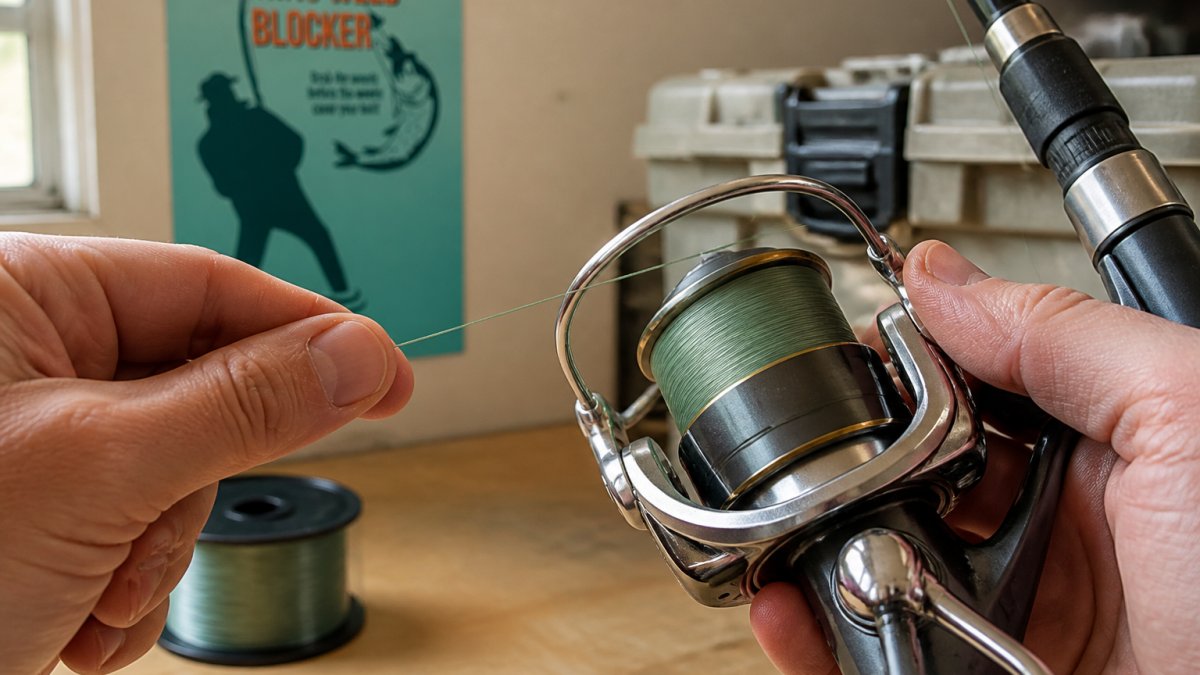
Setting up the spool and line lay correctly
Step 1: Position the source spool. Place it in front of you so line comes off naturally and the spool rotates freely.
Step 2: Check the direction. Watch which way the source spool rotates as line comes off.
Step 3: Attach the line. Tie the line to the reel spool with an arbor knot, tight enough not to slip.
Step 4: Open the bail. Open the bail arm by hand so you control the line lay.
Maintaining even line lay during the spooling process
Step 6: Start reeling slowly. Turn the handle steadily.
Step 8: Maintain consistent tension. Keep the same finger pressure throughout, or the line lay becomes uneven.
Step 9: Fill to the right level. Stop when the spool is about one-eighth inch from the rim.
Step 10: Close the bail. Close the bail manually and turn the handle once to make sure everything engages smoothly.
The key is even tension and smooth, steady reeling.
How to Prevent Fishing Line Twist Before It Starts
Once you understand the causes, preventing line twist becomes straightforward.
Using swivels and terminal tackle to reduce twist
A snap swivel is your best defense against line twist.
When a spinning lure rotates during retrieval, that spin travels up the line and creates twist without a swivel.
A ball-bearing swivel rotates more freely and handles spinning lures better.
Heavy spinning lures create more twist than non-rotating lures. If you're using spinning lures, use a swivel; with non-rotating lures it's less critical but still helpful.
Reel maintenance and drag adjustment
Keep your reel clean and well-maintained. A reel with stiff parts or damage introduces twist.
Check these parts regularly:
- Bail arm: Make sure it's straight and moves smoothly. A bent bail arm guides line unevenly.
- Rotor: Spin it by hand. It should rotate freely without resistance.
- Spool: Check that it spins freely. A spool that binds or hesitates causes problems.
- Line roller: Make sure it spins freely as the rotor advances.
Your drag setting matters too. A drag that's too tight stresses the line and spool, so line doesn't peel off smoothly when you cast. Set it so line pulls out under moderate pressure, not hard resistance.
Clean your reel after fishing, especially in saltwater or muddy conditions. Dirt and debris make parts stiff.
Fixing Uneven Line Lay on Your Spinning Reel
Sometimes the problem isn't twist but uneven line lay: line bunches on one side of the spool or leaves gaps, creating weak spots and casting problems.
Diagnosing uneven line lay and spool issues
Uneven line lay shows up as visible bunching on one side of the spool and gaps on the other, so line doesn't pull evenly when you reel.
Check for these signs:
- Line bunches on one side of the spool
- Gaps or thin spots on the other side
- The line doesn't advance smoothly when you reel
- Casting distance is shorter than normal
- The reel handle feels rough or catches slightly
It usually comes from spooling mistakes, a bent bail arm, or a rotor that doesn't advance smoothly. The fix depends on the cause.
Reel-specific fixes for spinning, baitcasting, and spincast models
Spinning reels are most prone to line lay problems because the bail arm and rotor must work together perfectly.
Fix for spinning reels:
- Straighten a bent bail arm carefully with gentle pressure
- Check that the rotor spins freely and advances with each turn of the handle
- Respool with proper tension and even guide work
Baitcasting reels have a spool that rotates with the handle, so line lay problems are less common.
Fix for baitcasting reels:
- Respool with even tension
- Check that the spool isn't bent or damaged
- Make sure the line guide moves smoothly
Spincast reels have a closed design that controls line placement, so uneven lay is rare.
Fix for spincast reels:
- Respool with lighter tension
- Use line that matches the reel's specifications
- Clean the line opening to make sure nothing is blocking it
For all reel types, the simplest fix is to respool. If the line has been on for a year or more, fresh line usually solves the problem.
Reel Type Differences: Spinning, Baitcasting, and Spincast
Different reel types handle line twist differently. Knowing yours helps you prevent and fix problems.
Why spinning reels are most prone to line twist
Spinning reels are the most common type for recreational fishing and the most prone to line twist.
The bail arm is the weak point. If it's even slightly bent, it guides line at an angle instead of straight, creating twist.
Spinning reels also transfer lure rotation to the line more easily than other types, which is why swivels matter so much for spinning reel users.
The good news: spinning reels are easy to maintain.
How baitcasting and spincast reels handle line twist differently
Baitcasting reels (conventional reels) have a spool that rotates with the handle, so line comes off directly without a bail arm.
The takeaway: spinning reels need more attention to prevent line twist, baitcasting reels are more forgiving, and spincast reels rarely have twist problems.
Fishing reel line twist is frustrating, but it's preventable and fixable.
At Fishing Weed Blocker, we know that clean presentations matter. When your line is twisted, your lure doesn't move right through the water.
Frequently Asked Questions
Why does my fishing line twist on a spinning reel?
Fishing line twist occurs when the reel's bail, rotor, or spool introduces rotation into the line during casting and retrieval. The most common causes are incorrect spooling direction, slack line during casting, uneven line lay on the spool, and worn bail rollers. Monofilament and fluorocarbon lines are especially prone to twist because they hold memory from being wound tightly on the spool. Using spinning lures that rotate aggressively without a swivel also contributes significantly to line twist.
How do you remove line twist from a fishing reel?
The most effective method is to let your line trail behind a moving boat or walk backward while holding the rod tip low, allowing the twisted line to unwind under tension. Reel in slowly and steadily. For lighter twist, tie on a snap swivel or ball-bearing swivel to the end of your line to absorb rotational stress. If twist is severe, respool your line in the opposite direction or replace it entirely. Never try to untwist line by spinning the reel handle backward, as this often makes the problem worse.
How do you spool a spinning reel without line twist?
Start by securing your line to the reel spool with an arbor knot, ensuring the line runs from the spool through the line roller on the bail. Have someone hold the line spool so it unwinds in the same direction the reel will wind it. Maintain steady, light tension on the line with your fingers as you crank the reel handle slowly. Check that line lays evenly across the spool in neat rows. If line bunches to one side, stop and adjust the spool position. Fill the spool until it's about one-eighth inch from the rim.
Can a twisted fishing line be fixed without removing it from the reel?
Yes, for minor twist. Use the trailing-line method: let the twisted section run behind a moving boat or walk backward with your rod tip low, allowing the line to unwind under water tension. You can also tie a snap swivel to reduce ongoing twist from lure rotation. However, if twist is severe or the line has developed permanent memory, replacement is more effective and saves frustration. Inspect the bail roller and line guide for wear, as damaged components will reintroduce twist into any new line you spool.