

Table of Contents
- What You'll Need Before You Handle Fish in Warm Shallow Water
- How to Hold a Fish Safely: Step-by-Step
- Essential Fish Handling Techniques for Warm, Shallow Conditions
- How to Revive a Fish After Catching It in Warm Water
- Catch and Release in Warm Water: Best Practices
- Common Mistakes to Avoid When Handling Fish in Warm Shallow Water
- When to Stop Fishing: Signs the Water Is Too Warm
- Conclusion
- Frequently Asked Questions
Last Updated: October 17, 2026
What You'll Need Before You Handle Fish in Warm Shallow Water
Warm shallow water holds less oxygen than cool deep water, so every second a fish stays out of it matters. Good handling starts before you ever touch a fish. Here is what to have ready on the bank or in the boat:
- A rubber-mesh landing net (knotless mesh protects slime and scales)
- A wet measuring board or soft tape
- Forceps or long-nose pliers for quick hook removal
- A pair of wet hands or a wet glove, never a dry towel
- A bucket of lake or river water to wet your hands and the net
- A hook holder to keep loose trebles away from fingers
The American Fisheries Society's fish handling guidance stresses that wetting your hands and gear first is one of the simplest ways to cut stress on a fish. Skip the dry towel. It strips the protective slime coat that shields a fish from infection.
How to Hold a Fish Safely: Step-by-Step
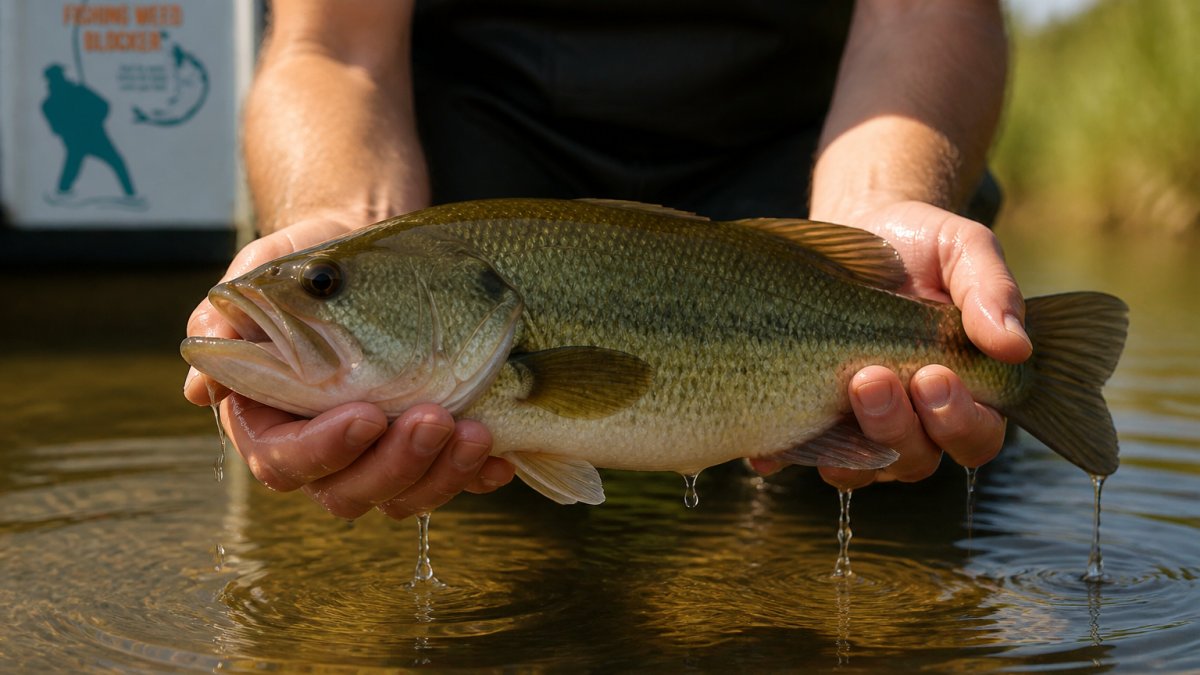
The safest grip supports a fish horizontally, never vertically by the jaw. Follow these steps every time you handle fish in warm shallow water:
- Keep the fish in the net, still in the water, while you remove the hook.
- Wet both hands fully.
- Slide one hand under the belly, just behind the pectoral fins.
- Support the tail wrist with your other hand so the body stays level.
- Keep the fish low, close to the water, and never squeeze.
- Remove the hook with forceps and get the fish back in fast.
Never hold a fish by the jaw and let it hang. That puts stress on the spine and organs. Support the whole body and keep the fish horizontal.
Essential Fish Handling Techniques for Warm, Shallow Conditions
Heat is the enemy here. The U.S. Fish & Wildlife Service's catch-and-release resources notes that warm water carries less dissolved oxygen, so a tired fish recovers more slowly. Adjust your fish handling techniques to match:
- Land fish quickly. A long fight in warm water drains a fish fast.
- Keep air exposure under about ten seconds when you can.
- Use single hooks or crush barbs where legal to speed release.
- Never drag a fish onto hot sand, gravel, or a dock.
- Keep the fish in the shade of the net while you unhook it.
A common mistake is posing a fish for photos in the sun. In warm shallow water, every extra second out of the water stacks the odds against a clean release.
How to Revive a Fish After Catching It in Warm Water
Reviving a fish means holding it upright in the water until it can swim off on its own. Here is how to revive a fish after catching it, especially in warm conditions:
- Keep the fish in the water, upright and level.
- Hold it gently behind the tail and under the belly.
- Point its head into the current, or move it slowly forward so water flows over the gills.
- Let go the moment it kicks and holds itself steady.
- If it rolls over, keep supporting it and try again.
Do not pump the fish back and forth hard. Gentle forward motion is enough to push oxygenated water across the gills. In warm shallow water, give the fish a little more time to recover before you release it. Patience during this critical recovery phase remains essential for long-term catch and release sustainability in fragile aquatic ecosystems.
Catch and Release in Warm Water: Best Practices
Catch and release in warm water needs a lighter touch than cool-season fishing. Fish are already stressed by low oxygen, so your job is to reduce every added strain:
- Fish early morning or evening when water is coolest.
- Land fish fast and skip the long fight.
- Keep the fish in the net, in the water, for unhooking.
- Use wet hands and wet gear only.
- Release fish promptly and revive them fully.
We also suggest carrying a hook holder on your rod. Loose trebles swinging near a thrashing fish are a real hazard in a small boat, and the Hook Guardian from Fishing Weed Blocker keeps hooks clipped safely to the rod between casts.
Hook Guardian | Fishing Hook & Lure Safety Holder | 2 Pack| Rod-Mounted Safe →
Common Mistakes to Avoid When Handling Fish in Warm Shallow Water
Most handling damage comes from a few repeat mistakes. Watch for these:
- Dry hands or a dry towel. This strips the slime coat. Wet everything first.
- Holding a fish vertically by the jaw. It stresses the spine. Support the body level.
- Long photo sessions in the sun. Keep air exposure short and the fish shaded.
- Dropping fish on hot surfaces. Use a wet net or board, never sand or dock.
- Rough unhooking. Use forceps and back the hook out the way it went in.
The fix for each is simple: wet gear, level support, short air time, and a quick, clean release. None of it costs you fishing time, and all of it protects the fish you put back.
When to Stop Fishing: Signs the Water Is Too Warm
Sometimes the right move is to stop. Warm shallow water can reach temperatures that make release survival poor, so watch for these signs:
- The water feels bath-warm to the touch.
- Fish are gulping at the surface for air.
- Fish look sluggish and fight weakly.
- Weeds and algae are thick and the water looks green.
- Midday sun has heated the shallows for hours.
When you see these, give the fish a break. Fish deeper, cooler water, switch to early or late hours, or call it a day. A fish released in overheated water may not survive, and no catch is worth that.
Conclusion
Warm shallow water is hard on fish, and sloppy handling makes it worse. The good news is that a few habits, wet hands, level support, short air time, and a full revive, cover most of the risk.
Our Hook Guardian keeps hooks and lures firmly in place on your fishing rod to prevent snags and tangles, and it is family and pet safe for transport. It fits most rods and travels easily in a boat or tackle bag.

Frequently Asked Questions
How long can a fish stay out of water before it is harmed?
In warm shallow water, a fish should be out of the water for no more than 10-15 seconds. Warm water holds less oxygen, and fish are already stressed. Prolonged exposure can cause brain damage or death. Keep the fish in the water while unhooking if possible, and have your camera ready for a quick photo. If you need more time, use a rubber net to keep the fish submerged while you prepare your tools.
What should I do if a fish is exhausted after being caught?
If a fish is exhausted, hold it upright in the water with one hand under the belly and the other supporting the tail. Move it gently forward and backward to force water over the gills. Continue until it can hold itself upright and swim away strongly. In warm water, this may take longer, so be patient. Avoid squeezing or dropping the fish, and never release it until it has regained its balance.
Does warm water make catch and release more dangerous for fish?
Yes. Warm water contains less dissolved oxygen, which stresses fish even before they are hooked. When you add the stress of catching, handling, and releasing, the fish's chance of survival drops. In water above 80°F, many species struggle. To reduce risk, land fish quickly, keep them in the water, and use proper fish handling techniques. If water temperatures are extreme, consider fishing during cooler parts of the day or targeting different species.
How can you release a fish safely in shallow water?
In shallow water, avoid dragging the fish onto dry land. Instead, keep it in the water and unhook it there. If you must lift it, support its body horizontally. To release, point the fish toward deeper water and let it swim away on its own. If it seems tired, revive it by holding it upright until it kicks away. Never toss the fish back, as this can cause injury.