
Table of Contents
- What Makes a Weedless Hook Work for Crappie
- Quick Comparison: 5 Best Weedless Hooks for Crappie 2026
- 1. Gamakatsu Weedless Finesse Wide Gap Hook
- 2. Owner Weedless Wacky Hook
- 3. VMC Weedless Neko Hook
- 4. Eagle Claw Weedless Baitholder Hook
- 5. Mustad Weedless Wide Gap Hook
- How to Fish Crappie in Heavy Weeds
- Frequently Asked Questions
Last Updated: September 27, 2026
What Makes a Weedless Hook Work for Crappie
A weedless hook has a wire or fiber guard that deflects vegetation from the point, letting you fish thick cover without constant snags. For crappie, that guard must collapse on a bite but still shed weeds.
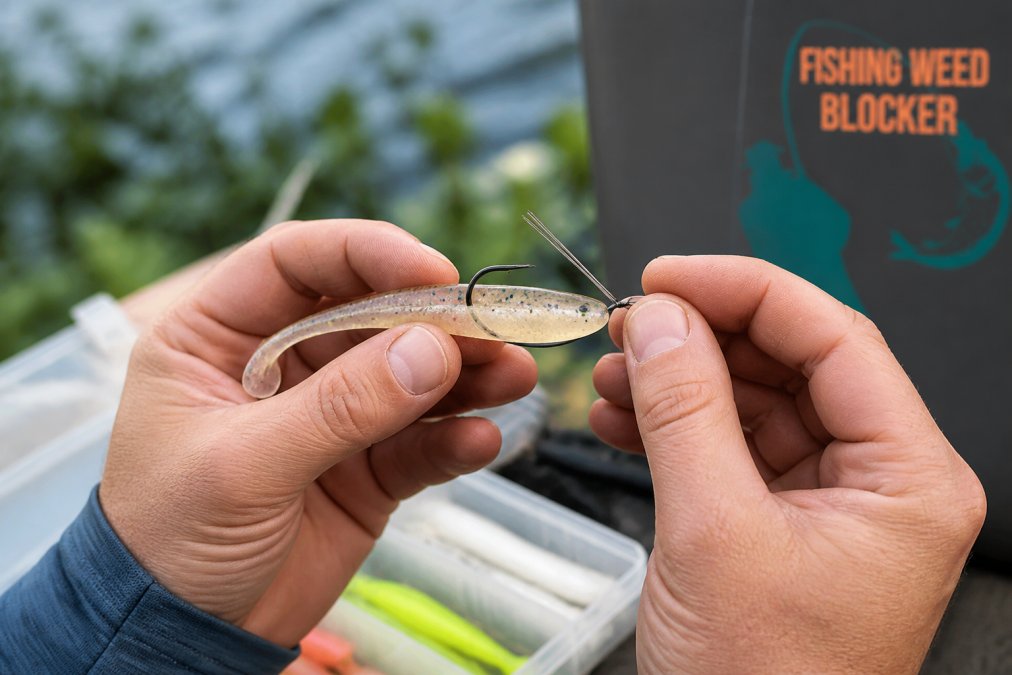
Three things decide whether a weedless hook performs:
- Wire gauge: Thinner wire penetrates easier but bends on hard cover. Look for a balance.
- Gap width: A wide gap gives the hook point room to clear the guard and find flesh.
- Guard angle: The guard should sit just above the point, not pressed against it.
Quick Comparison: 5 Best Weedless Hooks for Crappie 2026
| Hook | Best For | Key Trait | Guard Style |
|---|---|---|---|
| Gamakatsu Weedless Finesse Wide Gap | Finesse soft-plastics | Wide gap, fine wire | Wire |
| Owner Weedless Wacky Hook | Wacky and Neko rigs | Offset shank, strong point | Wire |
| VMC Weedless Neko Hook | Ned rigs and finesse | Wide gap, sharp point | Wire |
| Eagle Claw Weedless Baitholder | Live bait | Baitholder barbs on shank | Fiber |
| Mustad Weedless Wide Gap | All-around cover | Corrosion-resistant finish | Wire |
1. Gamakatsu Weedless Finesse Wide Gap Hook
Gamakatsu's finesse wide gap is the pick for soft-plastic crappie fishing in light to medium cover. The wide gap lets the point swing past the guard on the hook-set, and the thin wire penetrates a soft mouth without a hard hook-set. Pair it with a small swimbait or Ned-style plastic. Limitation: on heavy wood, the fine wire can roll over, this is a finesse hook, not a flipping hook.
Pros and Cons
Pros:
- Wide-gap design improves hook-penetration on soft mouths
- Fine wire keeps bait action natural in the water
- Strong out-of-the-box point
Cons:
- Bends on hard cover or big fish
- Not built for heavy braid and winching
2. Owner Weedless Wacky Hook
Owner's weedless wacky hook is built for wacky and Neko rigging, where the hook sits through the middle of a soft-plastic. The offset shank keeps the bait tracking straight and the wire guard rides tight to the point. The hook-set is different: reel down and lift rather than swinging hard. Where it falls short: the wacky orientation isn't ideal for live bait, for minnows under a slip float, look at the Eagle Claw.
Pros and Cons
Pros:
- Offset shank holds soft-plastics in place
- Guard sits tight, sheds vegetation well
- Excellent for Neko and wacky presentations
Cons:
- Wacky orientation limits live-bait use
- Requires a softer hook-set than beginners expect
3. VMC Weedless Neko Hook
VMC's weedless Neko hook targets Ned rigs and finesse presentations in shallow-water cover, with a wide gap and sharp point for pressured, short-striking crappie. The wire is slightly heavier than the Gamakatsu, which helps on brush-pile edges but costs penetration on the softest bites, keep your rod tip up and reel into the fish. A common mistake is over-guarding it: bend the guard too far down and it won't collapse on the bite. Leave it just above the point.
Pros and Cons
Pros:
- Wide gap suits Ned and finesse plastics
- Slightly heavier wire handles brush-pile edges
- Sharp point needs minimal hook-set pressure
Cons:
- Stiffer wire can cost penetration on light bites
- Guard needs regular adjustment
4. Eagle Claw Weedless Baitholder Hook
Eagle Claw's weedless baitholder is the live-bait option, with two shank barbs that grip a minnow or worm so it doesn't slide down after a cast. The fiber guard sheds vegetation well and won't tangle like wire, but it folds down over time and needs replacing, a fair deal for bait fishermen in shallow ponds.
Pros and Cons
Pros:
- Baitholder barbs keep live bait in position
- Fiber guard resists tangling
- Simple, affordable terminal-tackle option
Cons:
- Fiber guard wears out and needs replacing
- Less precise hook-set than wire-guard designs
5. Mustad Weedless Wide Gap Hook
Mustad's weedless wide gap is the all-arounder: the corrosion-resistant finish holds up in stained water, and the wide gap works with soft-plastics, swimbaits, and small live bait. The wire gauge sits between the fine-wire Gamakatsu and the heavier VMC, so it penetrates a crappie's soft mouth without a hard hook-set but still holds shape across a brush-pile edge. The finish suits stained, tannic water and brackish backwaters where bare hooks pit and rust.
How It Compares to the Other Four
- vs. Gamakatsu Weedless Finesse Wide Gap: The Gamakatsu is lighter and sharper out of the pack but rolls over on hard wood. The Mustad is better when brush piles and laydowns are in the mix.
- vs. Owner Weedless Wacky Hook: The Owner is purpose-built for wacky and Neko rigs. The Mustad is more versatile, it handles those presentations plus a Texas-rigged plastic or a live minnow under a float.
- vs. VMC Weedless Neko Hook: The VMC has slightly heavier wire and a sharper point, which helps on pressured fish and brush-pile edges. The Mustad trades a little sharpness for a corrosion-resistant finish that lasts longer in stained water.
- vs. Eagle Claw Weedless Baitholder: The Eagle Claw is the live-bait specialist with baitholder barbs and a fiber guard. The Mustad is better if you want one hook for soft-plastics and live bait without switching rigs.
Pros and Cons
Pros:
- Corrosion-resistant finish suits stained and tannic water
- Wide gap works across soft-plastics, swimbaits, and small live bait
- Medium wire gauge balances penetration and durability
- Consistent, predictable performance across cover types
Cons:
- Slightly heavier than finesse-specific hooks, which speeds the fall
- Point may need touching up out of the pack
- Not the best choice when you're counting the drop on suspended fish
Best Rigging for This Hook
For soft-plastics, rig it Texas-style with the point barely skin-hooked so the guard sits clean over the point. For live bait, hook a minnow through the lips or behind the dorsal fin and let the wide gap help a short-striking crappie find the point. For swimbaits, rig it exposed or with a light weed guard depending on cover thickness.
How to Fish Crappie in Heavy Weeds
Fishing crappie in heavy weeds comes down to four things: rigging weedless, keeping the bait above the vegetation, reading the cover type, and setting the hook through the guard. Start with a wide-gap weedless hook and a soft-plastic or live minnow. Cast past the cover, not into it, and let the bait fall on a semi-tight line so you feel the tick before it buries.
Match the Presentation to the Cover Type
Not all heavy cover fishes the same. Here's how experienced crappie anglers break it down:
- Brush piles and stake beds: Crappie magnets, but the wood is unforgiving. Fish a Texas-rigged soft plastic on a wide-gap weedless hook, pegged with a small bobber stop so the plastic doesn't slide down the shank on the fall. Pitch to the edges first, then work the interior. Crappie typically hold on the shady side of the pile.
- Lily pads and dollar pads: The pads are the cover, but fish sit in the gaps and along the outer edge. A weedless hook with a light plastic skipped under the pad and allowed to fall on slack line gets bit on the drop. Keep the rod tip high and watch the line, most strikes here are line-tick bites, not thumps.
- Hydrilla and milfoil mats: The top of the mat is barren; fish are on the outside edge or in the pockets. Drop a weedless jig or a weighted weedless hook straight down the edge. If the mat is thick, a heavier hook or small bullet weight gets you through the canopy to the strike zone.
- Laydowns and flooded timber: Horizontal wood is where fine-wire hooks roll over. Use a slightly heavier wire gauge and keep the bait moving, a slow, steady retrieve along the trunk triggers reaction bites better than a dead-stick.
Depth Control in Cover
Crappie in heavy cover are usually suspended at a specific depth, not glued to the bottom. In shallow water (under about 6 feet), a light weedless hook and slow fall keeps the bait in the strike zone longer. In deeper brush (10 to 20 feet), a slightly heavier hook or a small split shot 6 to 8 inches above the hook gets you down without killing the action.
Two more habits that pay off in heavy cover:
- Check your hook point every few casts. A dull point won't penetrate through the guard.
- Retie after every snag you pull free. Knot strength drops fast after a hard yank.
Line-to-Hook Knot Strength for Weedless Rigs
Weedless rigs stress your knot more than open-water rigs because you're constantly pulling through vegetation and popping snags. The Palomar holds up best: it seats cleanly on a hook eye and retains more line strength than a clinch, which can slip under cyclic loading.
- Tie the Palomar with the doubled line through the eye. Pass a loop through the eye, tie an overhand knot with the doubled line, pass the loop over the hook, and wet it before seating, a dry-seated Palomar can burn the line and fail.
- Match knot to line type. Braid is slippery, so a Palomar or double uni holds better than a clinch. Fluorocarbon is stiffer and more abrasion-prone, so inspect the last 12 inches above the knot after every fish or snag.
- Test before you cast. Give the knot a firm, steady pull, not a jerk. If it slips or the line looks cloudy, retie.
- Retie after every hard snag. A knot that survives a pop-free may still be compromised.
Hook Weight vs. Fall Rate
Hook weight changes the fall rate of your plastic more than most anglers realize. A fine-wire weedless hook weighs very little; a heavier-gauge or coated hook adds mass that speeds the drop.
- Light hooks (fine wire, no coating): Slow, gliding fall. Best for shallow water (under about 8 feet), pressured fish, and finesse plastics like a 2-inch Ned-style bait or small swimbait.
- Medium hooks (standard wire): The all-around choice, fast enough to reach 10 to 15 feet of brush without excessive tangle, with enough glide for a natural presentation.
- Heavy hooks (thick wire or coated): Fast fall for deep brush piles (15 to 25 feet) or wind and current. The trade-off is a stiffer, less natural action on finesse plastics.
Maintenance and Sharpening for Weedless Hooks
Weedless hooks dull faster than standard hooks because the guard and the vegetation it deflects both wear the point, and the guard makes sharpening trickier.
- Inspect the point every few casts. Run it lightly across your thumbnail. If it catches and leaves a scratch, it's sharp; if it slides, it's dull.
- Sharpen with the guard pushed aside. Use a fine-cut hook file or diamond hone. Push the guard to one side, then make three or four strokes along each of the three facets of the point. Don't file the top; that flattens it.
- Re-check the guard angle after sharpening. It should sit just above the point, not pressed against it and not bent so far up it won't collapse on a bite.
- Replace fiber guards when they fray. If the guard is limp or matted, swap the hook.
- Rinse and dry after every trip. A quick freshwater rinse and a dry box prevents rust at the point and the eye.
Frequently Asked Questions
What are the best weedless hooks for crappie in heavy cover?
For heavy cover, wide-gap hooks with a stiff wire weed guard work best. Look for hooks with a 1/0 to 2/0 size, offset shank, and corrosion-resistant finish. A wide gap improves hook-up ratio when crappie bite down on soft plastics, while the weed guard keeps the point clear of brush and vegetation. Pair these hooks with a slow, steady retrieve to keep the bait in the strike zone longer.
How do you rig a weedless hook for crappie?
Start by threading a soft-plastic minnow or tube onto the hook, then bury the hook point slightly into the plastic body to make it snag-resistant. For a Texas rig, insert the hook point into the nose of the bait, push it through, and slide the bait up over the eye. Then rotate the hook and bury the point back into the plastic. This keeps the hook weedless while still allowing a solid hook-set when a crappie strikes.
How does a weedless jig head compare to a standard hook for crappie?
A weedless jig head combines a weighted head with a weed guard, so it falls faster and stays snag-resistant in brush piles. A standard hook is lighter and works better in open water or when you need a slow, natural fall. For heavy weeds, the jig head's weight and guard make it easier to feel the bottom and avoid hang-ups. For shallow, sparse cover, a standard hook with a small split shot may be all you need.
What size weedless hook should I use for crappie?
Crappie have small mouths, so hook size matters. A size 1 or 1/0 hook fits most crappie, while a 2/0 works for larger fish or when using bigger soft plastics. Match the hook gap to your bait: the gap should be about twice the width of the bait's body. If you're fishing in thick vegetation, a slightly larger hook with a stiffer weed guard helps keep the point clear and improves hook penetration.
Crappie fishing in heavy cover punishes sloppy terminal tackle. The right weedless hook helps, but keeping your bait clear of weeds matters just as much. Fishing Weed Blocker is a patented, award-winning device sold in a 4 pack that grabs weeds before they cover your bait, protects your presentation, and casts clean with minimal drag. Get started with Fishing Weed Blocker and keep your bait in the strike zone longer.