
Table of Contents
- What Makes a Tool Truly Snag-Free?
- How Weed Guards and Snag Prevention Work
- 1. Fishing Weed Blocker: The Core Snag-Free Device
- 2. Hook Guardian: Rod-Mounted Snag and Safety Clip
- 3. Weedless Hooks and Soft Plastics for Beginners
- 4. Alternatives to Using Planer Boards in Thick Weeds
- 5. How to Keep Bait Clear of Weeds While Trolling
- 6. Line and Leader Tools That Reduce Snags
- Conclusion
- Frequently Asked Questions
Last Updated: September 20, 2026
What Makes a Tool Truly Snag-Free?
Snag-free tools keep your hook, lure, or bait from catching on weeds, rocks, or debris during a cast or retrieve, without slowing your lure or changing how it moves.
How Weed Guards and Snag Prevention Work
Weed guards and snag prevention devices put a physical barrier between your hook point and the cover around it, letting your lure slide over or through weeds instead of digging in.
There are two main approaches:
- Deflection: A wire, plastic, or brush guard pushes weeds away from the hook point.
- Collection: A device grabs weeds before they reach your bait and holds them there.
1. Fishing Weed Blocker: The Core Snag-Free Device
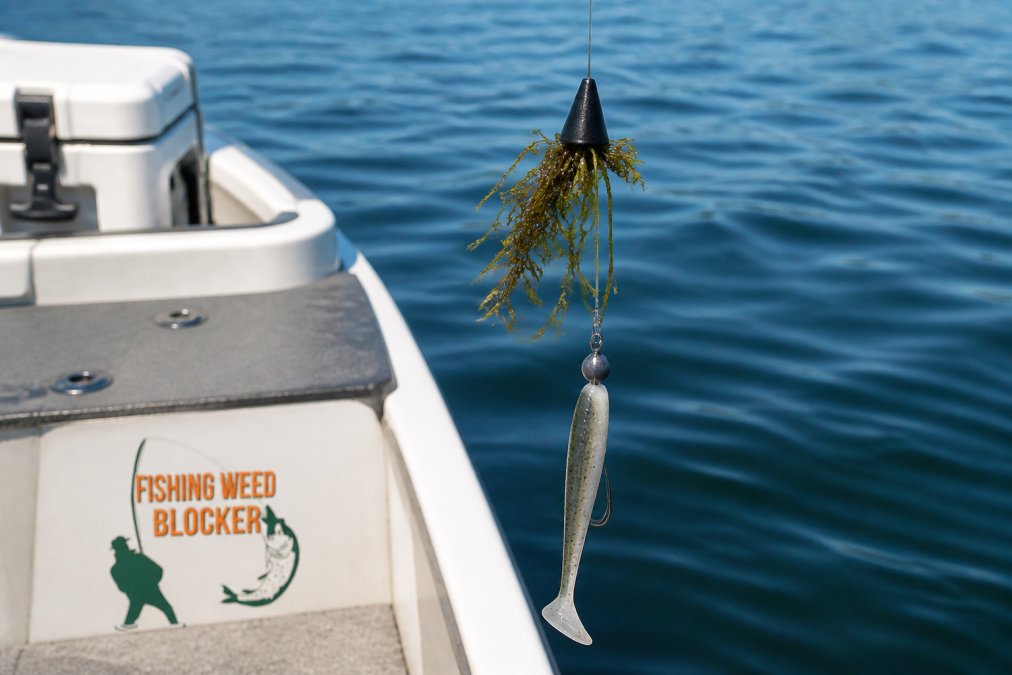
The Fishing Weed Blocker solves the weed problem directly, a patented device that grabs weeds before they cover your lure or bait.
Why beginners like it:
- It works for both trolling and bait fishing
- It stacks flat in a tackle box
- It's built to last
Why It Works for Trolling and Bait Fishing
Trolling puts your lure in the water for long stretches, and every weed that catches means a lost fish or wasted pass. The Fishing Weed Blocker collects weeds on the device instead of your hook.
2. Hook Guardian: Rod-Mounted Snag and Safety Clip
The Hook Guardian keeps hooks and lures locked in place on your rod, so there are no snags in your car, boat, or tackle bag.

What it does:
- Holds hooks and lures firmly on the rod
- Protects kids and pets from exposed hooks
- Fits most fishing rods
- Works for travel, storage, and transport
3. Weedless Hooks and Soft Plastics for Beginners
Weedless hooks hide the hook point inside or behind a soft plastic bait, so the bait slides through cover and the hook sets when a fish bites down. Execution is where beginners lose fish, so this section walks through the mechanics.
The Three Weedless Hook Styles
Almost every weedless setup uses one of three hook families. Pick the family first, then the rig.
- Offset worm hook (extra-wide gap). The classic Texas rig hook. The bend and offset let the plastic sit straight, and the wide gap leaves room for the plastic to compress on the hookset. Best for soft stickbaits, worms, and creature baits in grass and wood.
- Straight-shank worm hook. No offset. The plastic runs truer and the bait tracks straighter on a slow retrieve, but you need a smaller hook point or the plastic tears. Best for finesse worms and drop-shot presentations in clear, sparse cover.
- Weighted swimbait / belly-weighted hook. The weight sits on the shank, so the bait stays horizontal and skips under docks and overhanging brush. Best for paddle-tail swimbaits in shallow wood and around boat docks.
How to Rig a Texas Rig (Step by Step)
The Texas rig is the most beginner-friendly weedless setup: cheap, effective in almost every cover type, and no special tools required.
- Slide a bullet weight (1/8 to 3/8 oz is a good starting range) onto your main line, point first.
- Tie on your offset worm hook with a Palomar knot. Trim the tag end close.
- Insert the hook point into the nose of the plastic, about 1/8 inch in, and push it through until the nose sits against the hook eye.
- Rotate the plastic so the hook point exits the bottom, then slide the plastic up over the hook eye and the knot.
- Bring the hook point back to the plastic and measure where it lands. That is your entry point for the final step.
- Insert the point at that spot and push it through so the point barely exits the top of the plastic. Then bury the point just under the surface, skin-hooked, not poking through.
The Hookset: Why Beginners Miss Fish
A weedless hook must travel through plastic before it reaches flesh, so a soft, sweeping hookset won't generate enough energy to punch through.
- Reel down first. Take up slack until you feel the fish, then sweep the rod hard to the side or straight up.
- Use a faster rod. A fast or extra-fast action rod loads quickly and transfers energy into the hook. A moderate-action rod bends too much and absorbs the set.
- Do not set on the first tick. In grass, the first tick is often a weed or a baitfish bump. Wait until you feel weight, then set.
Rig Options by Cover Type
Match the rig to the cover, not to the fish.
Hook Guardian | Fishing Hook & Lure →
- Weightless Texas rig. Best for shallow water, sparse grass, and skipping under overhangs. The slow fall triggers bites, but it is hard to cast into wind.
- Texas rig with bullet weight. Best for matted grass, lily pads, and punching through the canopy. The weight gets the bait down fast and keeps it there.
- Carolina rig. Best for deeper water and bottom fishing over shell beds and rock. The leader keeps the bait off the bottom and the weight stays in contact, so you feel structure.
- Ned rig. A small mushroom head with a short plastic. Best for pressured fish and cold water. It is not truly weedless, but the exposed hook is small enough that it slides through light grass.
- Drop-shot. Best for clear water and vertical fishing around docks and brush. The weight sits below the bait, so the bait stays above the snag.
Common Rigging Mistakes That Cause Snags
- Hook point poking through the plastic. The single biggest cause of snags on a weedless rig. Re-skin the bait after every fish.
- Plastic slid down the hook shank. The bait bunches at the bend and the hook point is exposed. Re-seat the nose against the eye.
- Too large a hook for the plastic. The plastic tears and slides, exposing the point. Match hook size to bait length, a 4/0 or 5/0 offset is a good starting point for a 6-inch worm.
- Too heavy a weight in shallow grass. The bait digs into the mat instead of riding over it. Step down to 1/8 oz and slow your retrieve.
4. Alternatives to Using Planer Boards in Thick Weeds
Planer boards spread your lines away from the boat and work great in open water, but in thick weeds they're a liability.
Better options for weedy water:
- Short lines behind the boat. Keep your lures close so you can control them.
- Weed collection devices. Let a tool handle the weeds instead of spreading your line.
- Weedless presentations. Texas rigs and weedless spoons slide through cover.
5. How to Keep Bait Clear of Weeds While Trolling
Keeping bait clear of weeds while trolling comes down to depth control, weed collection, and line angle. Get those right and you'll spend more time fishing and less time cleaning.
- Troll faster in shallow weeds to keep your bait up
- Troll slower in deep weeds to let your bait sink
- Check your bait every few minutes for collected debris
6. Line and Leader Tools That Reduce Snags
Line and leader choices affect snag rates more than most beginners think: the right setup slides through cover, the wrong one grabs everything. This section covers the trade-offs by line type, then the tools that keep your line in fishing shape.
Line Type Trade-Offs
| Line type | Sink rate | Stretch | Abrasion resistance | Best for |
|---|---|---|---|---|
| Braid | Floats | Almost none | High | Heavy grass, matted cover, punching |
| Fluorocarbon | Sinks | Low | High | Clear water, rock, shell beds, leader material |
| Monofilament | Slow sink | Moderate | Moderate | Topwater, treble-hook lures, general use |
Braid floats with almost no stretch, transmitting every tick of a weed. That sensitivity is a gift in heavy cover, you feel the difference between grass and a bite, but a curse in open water, where every piece of debris feels like a strike.
Leader Choices by Cover
A leader is a short length of line between your main line and your lure, letting you mix properties, braid for strength and sensitivity, fluorocarbon for invisibility and abrasion resistance.
- Braid main line + fluorocarbon leader. The standard heavy-cover setup. Braid cuts through grass, fluorocarbon handles abrasion near rock and wood. Use a 12- to 24-inch leader and connect with an FG knot or a double uni.
- Braid main line + monofilament leader. Good for topwater and treble-hook lures in grass. The mono stretch absorbs the hookset and reduces pulled hooks.
- Straight fluorocarbon. Best in clear water with light cover. Fewer knots, fewer failure points, but more cost and more memory.
- Straight monofilament. Best for beginners on a budget. Forgiving, cheap, and easy to tie. Step up a size to compensate for lower abrasion resistance.
Tools That Keep Line Snag-Free
- Line cutters. Sharp ones, kept handy. Dull cutters fray line and create weak points. Replace them when they start crushing rather than slicing.
- Seam rippers. Great for picking apart tangled line without cutting it. A seam ripper also works as a hook-out for deeply buried hooks.
- Leader spools. Keep leaders organized so you are not tying knots in the wind. Pre-tie a few leaders at home and store them on a spool or a foam leader wallet.
- Line conditioner. Reduces memory and friction, which means fewer coils and longer casts. Apply before a trip, not on the water.
- Hook sharpener. A dull hook does not penetrate on the hookset, and a hook that does not penetrate tears the plastic and exposes the point. Touch up hooks before every trip.
How Line Choice Interacts With Snag Tools
Your line choice changes how your snag tools perform.
- With a weed collection device. Braid is the better main line because it floats and keeps the device riding high in the water column, where it can intercept weeds before they reach your bait. Fluorocarbon sinks and pulls the device down into the weeds.
- With a weedless presentation. Fluorocarbon leader near the bait adds abrasion resistance without adding much visibility. Braid straight to the hook is fine in heavy grass but shows in clear water.
- With a planer board. Braid is the standard because it cuts through surface weeds and does not stretch, so the board tracks predictably. Mono stretches and the board surges.
A Beginner Line Setup That Works Almost Everywhere
If you only want one setup to start, this is it:
- 30-pound braid main line
- 15-pound fluorocarbon leader, 18 inches
- FG knot to connect
- Palomar knot to the hook
Conclusion
Snags cost you time, tackle, and fish. For beginners, they're the fastest way to turn a good day on the water into a frustrating one.
Frequently Asked Questions
What is a snag-free tool in fishing?
A snag-free tool is any device, hook design, or line accessory that stops weeds, rocks, or debris from covering your bait or tangling your line. Common examples include weed guards, weedless hooks, and dedicated devices like the Fishing Weed Blocker, which grabs weeds before they reach your lure. These tools matter most in ponds, lakes, and rivers with heavy vegetation, where a fouled presentation means missed strikes.
How do I keep my bait from getting covered in weeds?
Rig your bait weedless by burying the hook point slightly into soft plastics, use a weed guard device above your lure, and keep your retrieve steady so the bait stays above the vegetation. In thick cover, a dedicated snag-free tool like the Fishing Weed Blocker intercepts weeds before they wrap your bait. Pair that with a faster, more consistent retrieve and you will spend less time clearing your line.
Do I need special gear for trolling in weed-heavy areas?
You do not need an entirely new setup, but a few additions help. A weed-blocking device ahead of your lure, a moderate-speed reel that keeps your line tight, and a rod with enough backbone to pull through vegetation all reduce fouling. Beginners often overlook line choice too. Braided line cuts through light weeds better than monofilament and transmits strikes more clearly when your lure is running behind cover.
Can I fish effectively in thick vegetation?
Yes. Thick vegetation holds fish because it provides cover and oxygen, so avoiding it entirely costs you bites. The key is presentation. Use weedless rigs, run a snag-free tool above your bait, and keep your retrieve consistent so the lure tracks cleanly. Anglers who fish weeds regularly can be successful, provided their gear keeps the bait visible.